When the evenings turn cold, a pan of something warm and spiced on the hob does more for a gathering than any cold drink. Mulled wine, mulled cider and the hot toddy are the classics of a British Christmas, and they are simple to make. They are also easy to get wrong: boiled, over-sweet, or much stronger than anyone realised. This post gathers our warm Christmas drinks and the few things that make them work.
The recipes
No. 013 · Cocktail
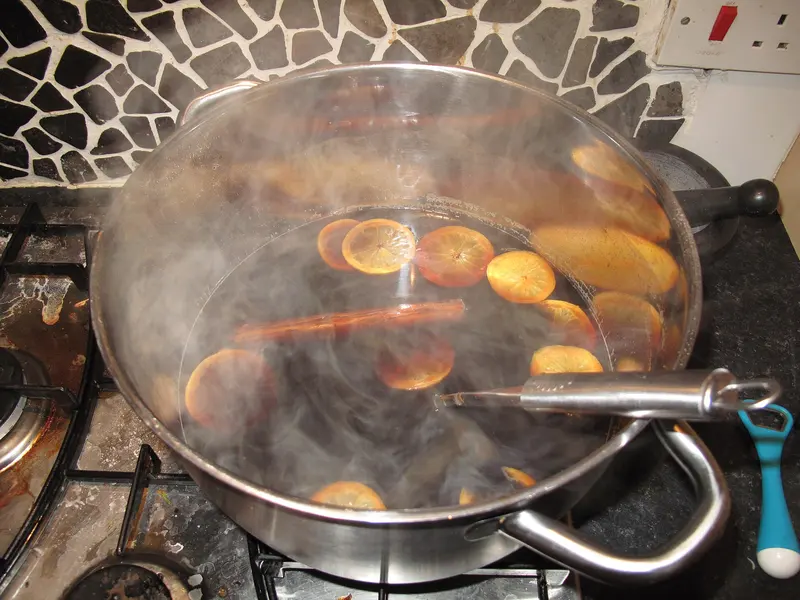
Mulled Wine
Red wine gently warmed with orange, sugar and whole spices: a house recipe for six.
Photo: Wheeler Cowperthwaite, CC BY 2.0
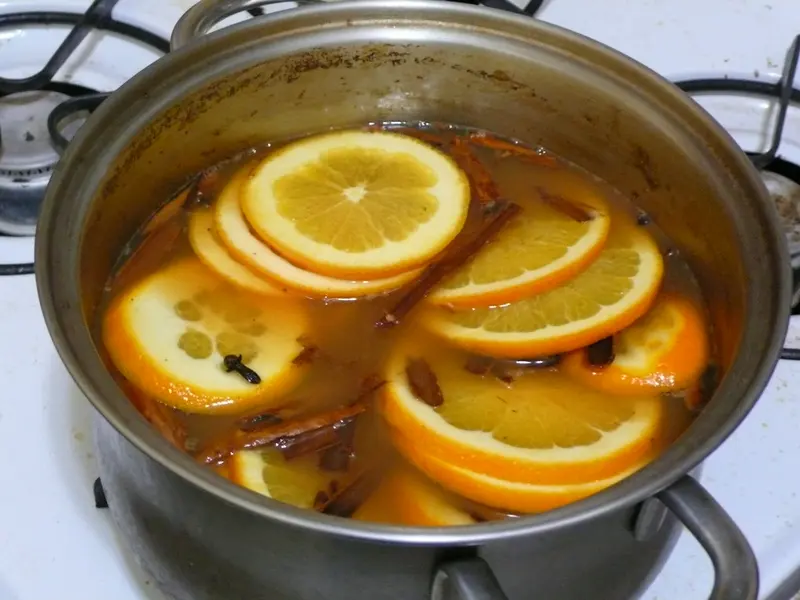
No. 010 · Cider
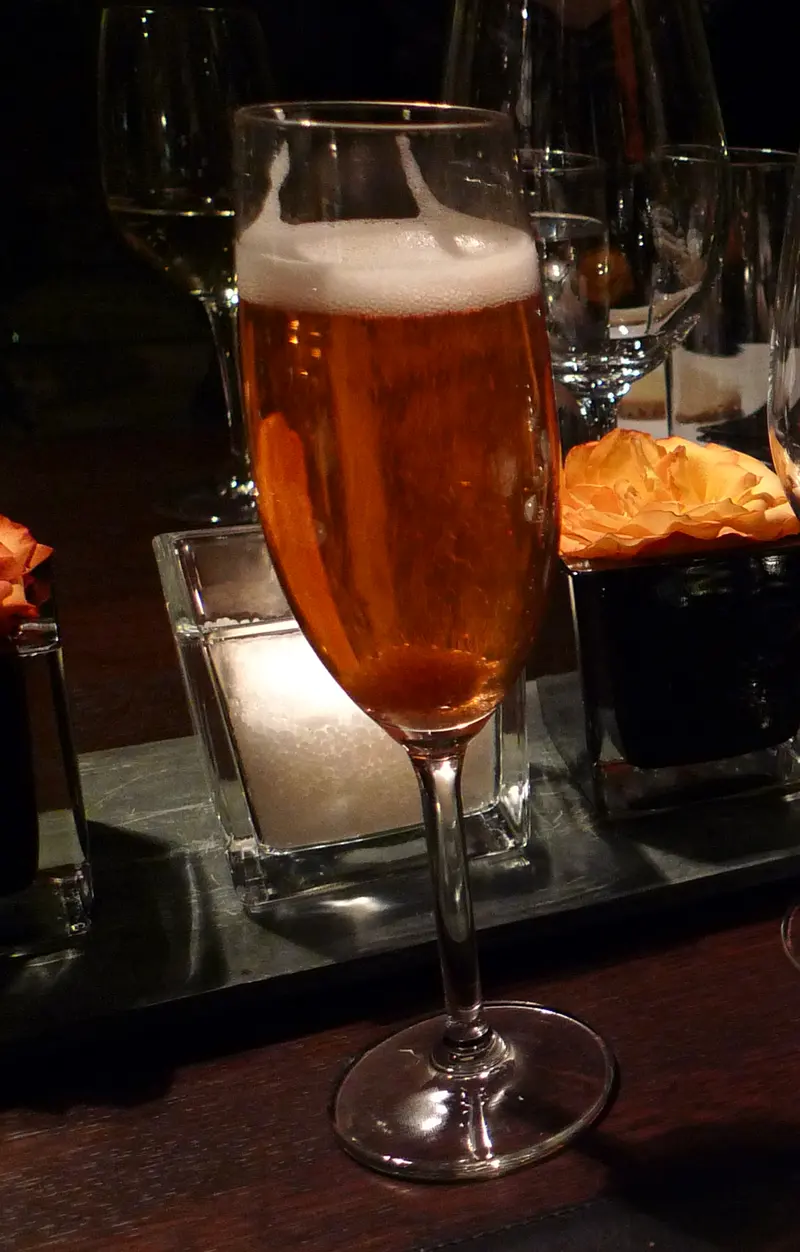
Mulled Cider
Dry cider gently warmed with apple, orange, brown sugar and whole spices: a house recipe for four.
Photo: mlcastle, CC BY-SA 2.0
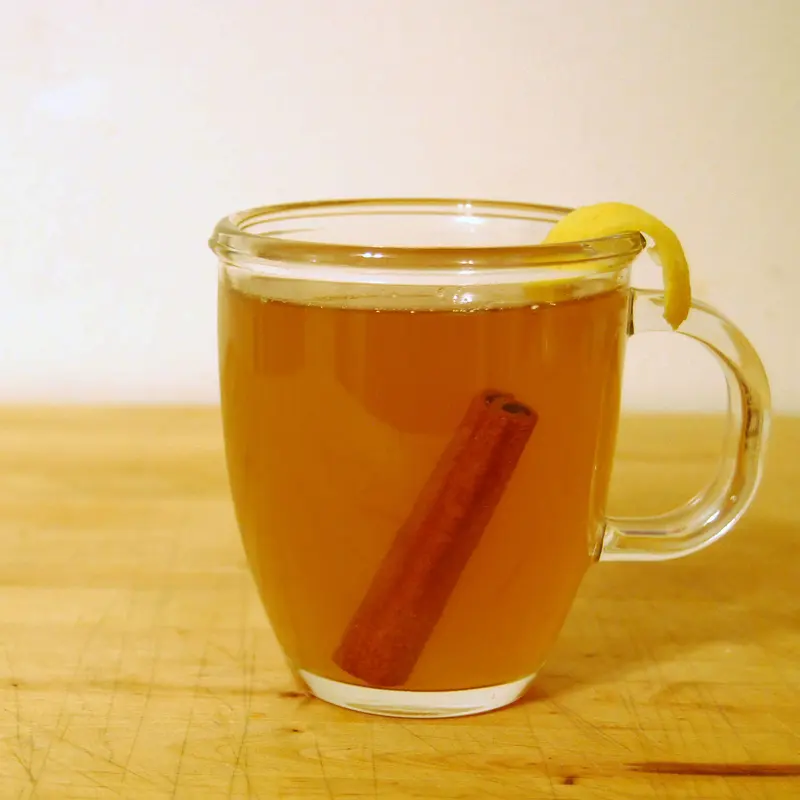
No. 012 · Cocktail
Hot Toddy
Whisky, honey and lemon topped with hot water and lightly spiced. A house recipe for a cold evening.
Photo: Patrick Truby, CC BY-SA 2.0
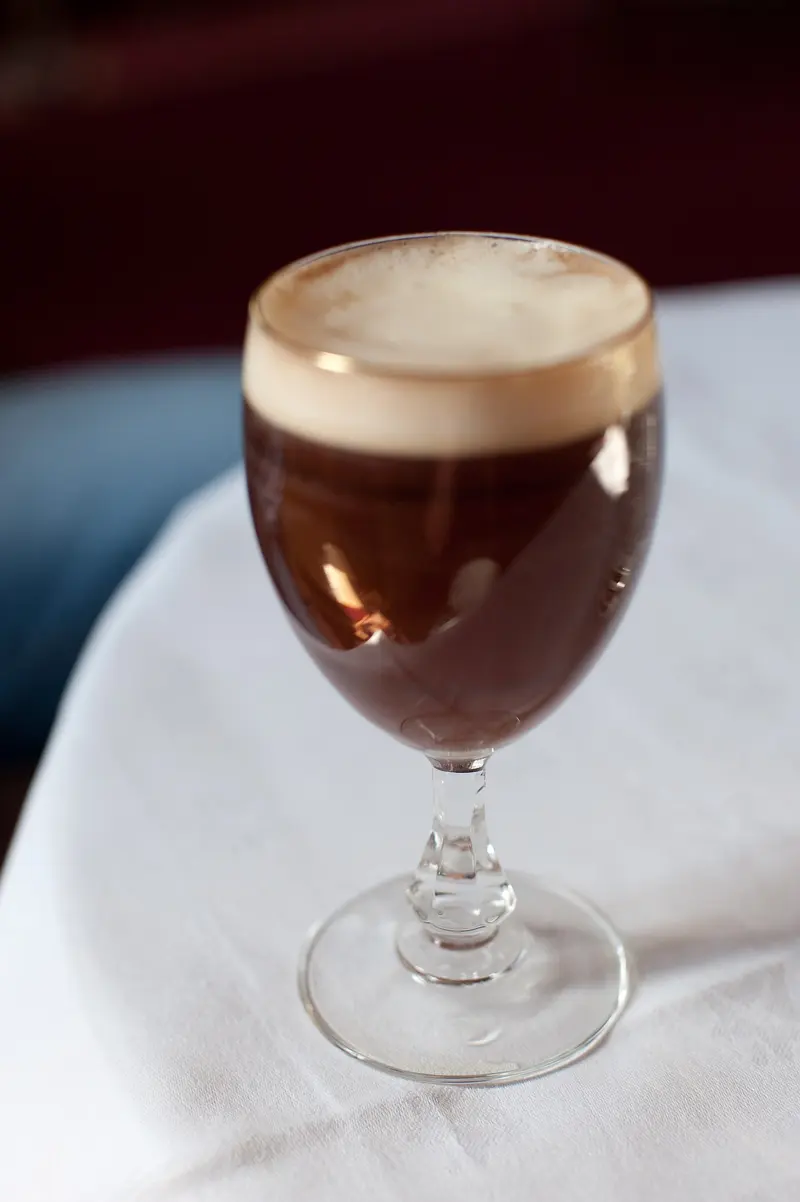
No. 043 · Cocktail · IBA
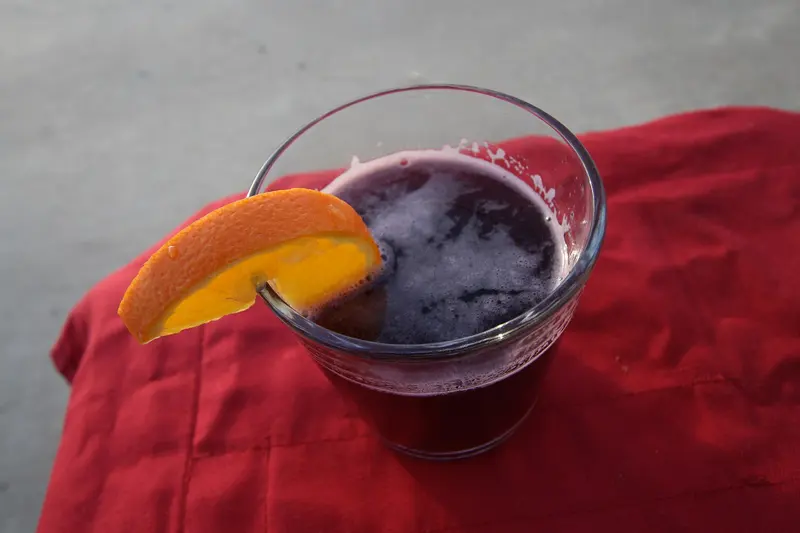
Irish Coffee
Hot coffee, Irish whiskey and sugar, topped with a float of chilled cream. Contains caffeine and alcohol.
Photo: jules / stone soup, CC BY 2.0
Warm it, don't boil it
Every one of our hot recipes says the same thing: keep the heat low. Our mulled wine is warmed gently until the sugar dissolves, then kept just below a simmer for about 15 minutes so the spices infuse. Boiling drives off the aroma and makes the spices bitter. Mulled cider gets the same treatment for 10 to 15 minutes, because boiling dulls its flavour.
A few more points from the recipes:
- Choose the base with care. The mulled wine uses a fruity, unoaked red. The mulled cider uses a still or medium-dry cider.
- Use whole spices. Cinnamon sticks, cloves and star anise, with a pinch of grated nutmeg in the wine if you like. Whole spices are easy to leave behind in the pan when you ladle.
- Sweeten at the end. The wine starts with 50 g of soft brown sugar per bottle and the cider with 2 tablespoons per litre. Both recipes tell you to taste and adjust once the spices have done their work, because wines and ciders vary in sweetness.
- Serve in heatproof glasses or mugs, and leave the spices in the pan.
The hot toddy and Irish coffee
A hot toddy is made one glass at a time. Warm the glass, dissolve a tablespoon of honey in a splash of hot water, add 50 ml of whisky and 15 ml of lemon juice, then top up with hot, not boiling, water. Cloves pressed into a lemon slice, or a cinnamon stick, are optional.
The Irish coffee follows the official IBA specification: hot black coffee, 50 ml of Irish whiskey and at least a teaspoon of sugar stirred together, then lightly thickened, chilled cream poured over the back of a spoon so it floats. It contains caffeine as well as alcohol, which is worth remembering late in the evening. Our guide to caffeine in tea, coffee and soft drinks has the figures.
- Milk pan / saucepan Search Amazon.co.uk for Milk pan / saucepan (opens Amazon in a new tab)
- Heatproof glass mugs Search Amazon.co.uk for Heatproof glass mugs (opens Amazon in a new tab)
- Irish coffee glass Search Amazon.co.uk for Irish coffee glass (opens Amazon in a new tab)
Amazon links search Amazon.co.uk, so you can compare options yourself. As an Amazon Associate I earn from qualifying purchases.
How strong is a glass?
A warm drink goes down easily, and a ladle isn't a measure. The NHS formula works for any drink: strength (ABV %) × volume (ml) ÷ 1,000 = units. Applied to our recipes:
- Mulled wine: the NHS counts a 750 ml bottle of 13.5% wine as 10 units. Shared six ways, as in our recipe, that's about 1.7 units a glass. A stronger wine means more.
- Mulled cider: a litre of 5% cider is 5 units, so about 1.25 units for each of four servings. Check the label: ciders range widely in strength.
- Hot toddy and Irish coffee: 50 ml of whisky at 40% is 2 units.
Don't count on the warming to take the alcohol out. Our recipes keep the pan below a simmer, so it's safest to count the drink as the wine or cider you poured in.
The UK Chief Medical Officers' guideline is not to drink more than 14 units a week on a regular basis, spread over three or more days. For a single evening they advise limiting the total, drinking more slowly, drinking with food and alternating with water. Our guide to drinking responsibly explains the guidelines in full.
If you're driving
The Chief Medical Officers' advice is to avoid alcohol altogether if you're planning to drive. Drinkaware adds that the only way to get rid of alcohol is to let time pass, and that the safest approach is to avoid alcohol completely the night before you have to drive. Our guide to drink-driving and the morning after gives the legal limits, which are lower in Scotland.
Warm drinks without the alcohol
For drivers, children and anyone not drinking, the tea room has warm drinks with the same spices:
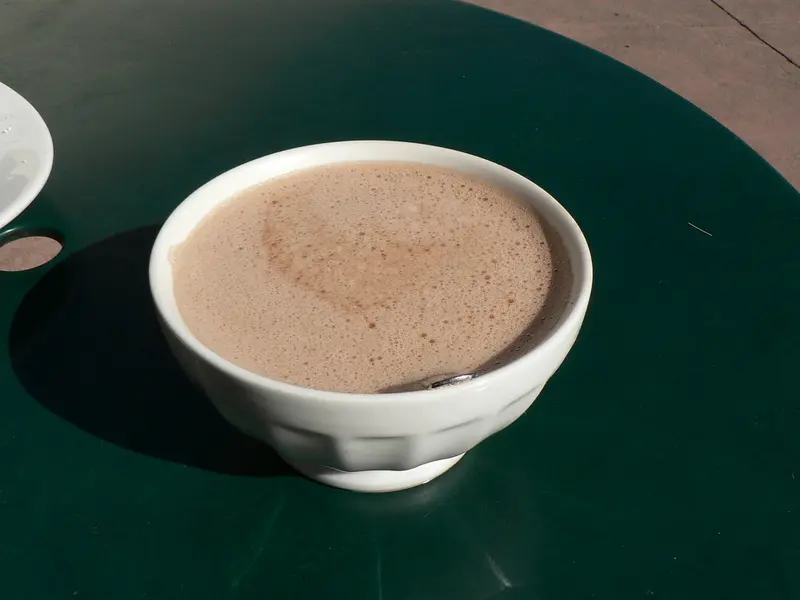
No. 132 · Hot chocolate
Spiced hot chocolate
Dark chocolate and milk warmed with cinnamon, nutmeg and orange zest; add a pinch of chilli for grown-ups. A house recipe.
Photo: stu_spivack, CC BY-SA 2.0
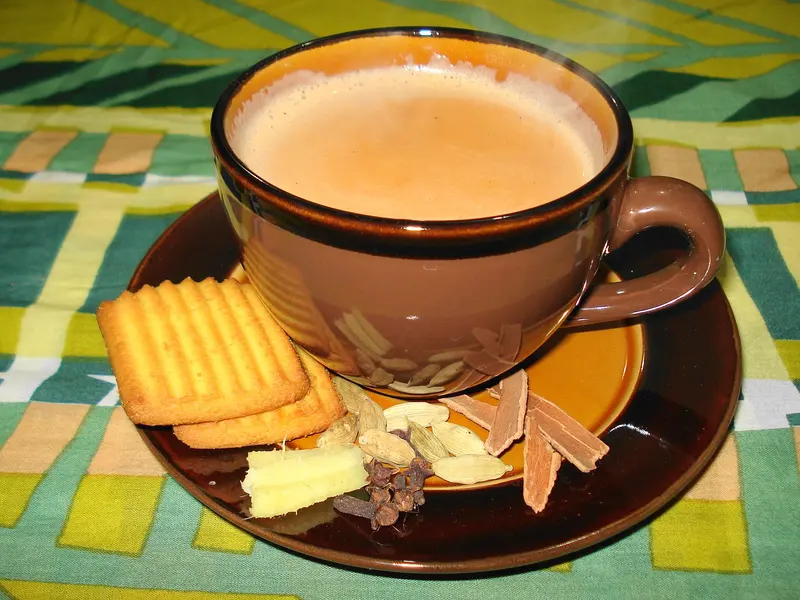
No. 113 · Tea
Masala chai
Black tea simmered with milk, sugar and warming spices such as cardamom, ginger and cinnamon. A house recipe.
Photo: Miansari66, Public domain
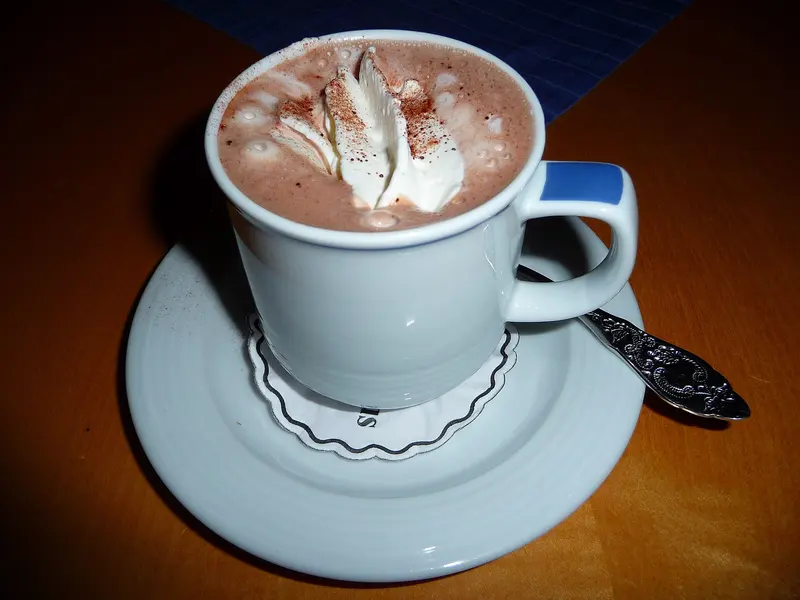
No. 130 · Hot chocolate
Proper hot chocolate
Real dark chocolate melted into hot milk for a thick, rich, less sweet drink. A house recipe.
Photo: 4028mdk09, CC BY-SA 3.0
Our spiced hot chocolate infuses the milk with cinnamon, nutmeg and orange zest before the chocolate goes in, so it shares the flavours of the mulled wine. Leave out the optional chilli for children. Masala chai is simmered with cardamom, ginger, cinnamon and cloves, and contains caffeine from the tea.
With pans of hot drinks on the go and mugs at child height, it's worth reading our post on hot drinks and small children too. For more alcohol-free ideas, see alcohol-free Christmas drinks.
Sources
- NHS: Alcohol units (reviewed 27 August 2024)
- UK Chief Medical Officers' Low Risk Drinking Guidelines (August 2016)
- Drinkaware: Can I drive the morning after drinking alcohol?
Checked when this entry was written. Links open the original source in a new tab.
Checked 23 November 2026.