"Have a drop of something to keep the cold out" is one of those bits of folk wisdom that refuses to go away. A whisky after a frosty walk, a hip flask at the bonfire, a few drinks before walking home from the Christmas party: it all feels warming. But the warmth is misleading. Here is what the alcohol education charity Drinkaware and the NHS say about alcohol and the cold, and what to drink instead. This is general information, not medical advice.
Why a drink feels warming
Drinkaware explains that alcohol widens the blood vessels near your skin, which is what creates the feeling of warmth. The problem is where that blood comes from. In Drinkaware's words, "the blood being diverted away from your vital central organs can cause your core temperature to drop." Left unchecked, it says, that can lead to hypothermia.
So you feel warmer on the outside while your body is losing heat.
The "beer jacket"
Drinkaware also describes a "beer jacket" effect. Alcohol reduces how cold you feel the air to be, and it dulls natural responses that help keep you warm, such as shivering. You notice the cold less, and your body does less about it.
Judgement, balance and icy pavements
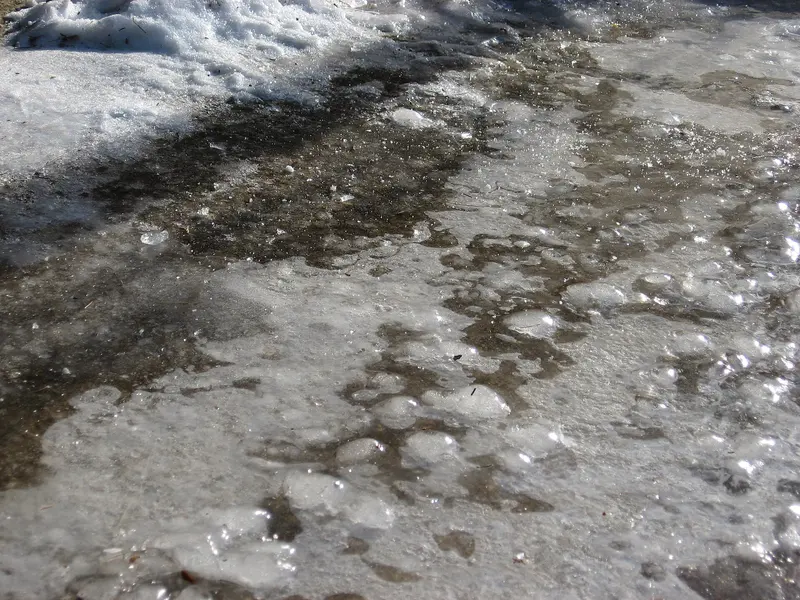
The bigger risk on a winter night out is often the decisions. Drinkaware points out that alcohol impairs decision-making, so you might take risks you wouldn't when sober, and gives the example of walking home in the snow without a jacket. It also affects balance, which makes a fall on an icy pavement more likely.
Its tips for winter nights out are simple:
- Plan how you'll get home before you go out.
- Stick with your friends.
- Wear warm clothing and sensible footwear.
- Keep within the UK Chief Medical Officers' low-risk guideline of no more than 14 units a week, spread over three or more days with drink-free days, and avoid bingeing.
Our guide to drinking responsibly explains units and the guidelines in more detail, and drink-driving and the morning after covers why driving the next morning can still be a problem.
Hypothermia: the signs
Drinkaware and the NHS both say that a body temperature below 35°C means hypothermia, a medical emergency that needs treating in hospital. The NHS lists these signs:
- shivering
- pale, cold and dry skin (lips and skin may look blue or grey)
- slurred speech, slow breathing, tiredness or confusion
Slurred speech and confusion can be easy to put down to drink. That is one reason to keep an eye on a friend who has had a few drinks on a cold night rather than assuming they're just tipsy.
What the NHS says to do
The NHS says to go to A&E or call 999 if you think someone has hypothermia, and not to drive yourself. While you wait for help:
Do:
- Move them indoors or to shelter as quickly as possible.
- Remove wet clothing and cover them with a blanket, sleeping bag or dry towel, keeping their head covered.
- If they're fully awake, give them a warm non-alcoholic drink and a sugary snack.
- Keep them talking, and stay with them until help arrives.
Don't:
- use a hot bath, hot water bottle or heat lamp to warm them
- rub their arms, legs, hands or feet
- give them any alcohol
What to drink instead
The NHS's own advice, a warm non-alcoholic drink, is a good rule for any cold day. Some ideas from our shelves:
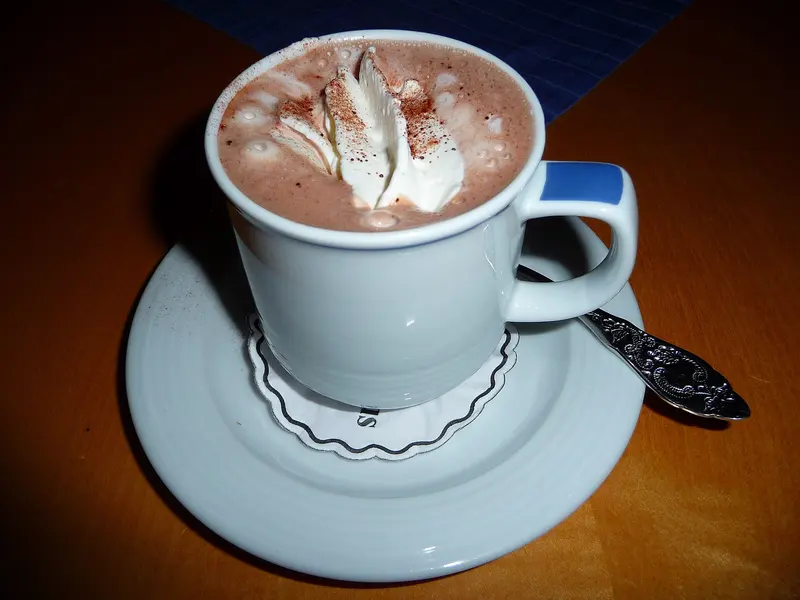
No. 130 · Hot chocolate
Proper hot chocolate
Real dark chocolate melted into hot milk for a thick, rich, less sweet drink. A house recipe.
Photo: 4028mdk09, CC BY-SA 3.0
No. 113 · Tea
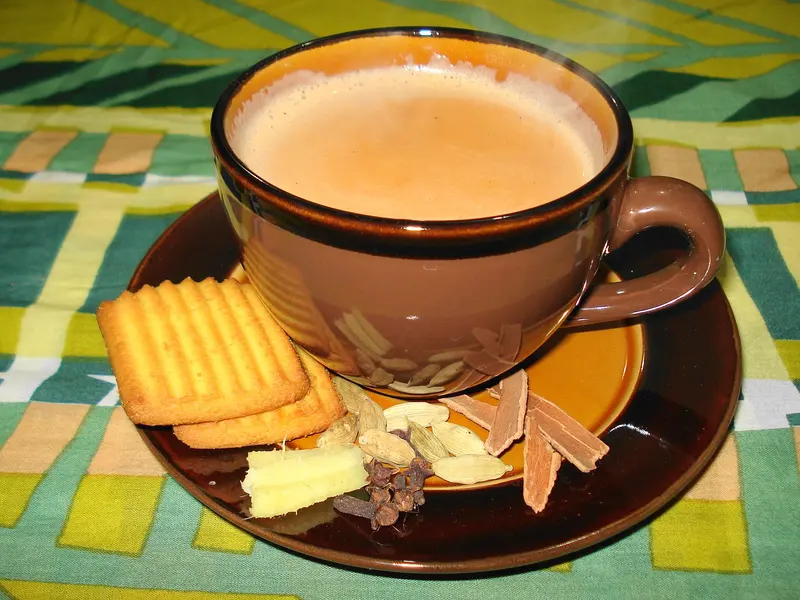
Masala chai
Black tea simmered with milk, sugar and warming spices such as cardamom, ginger and cinnamon. A house recipe.
Photo: Miansari66, Public domain
No. 114 · Tea
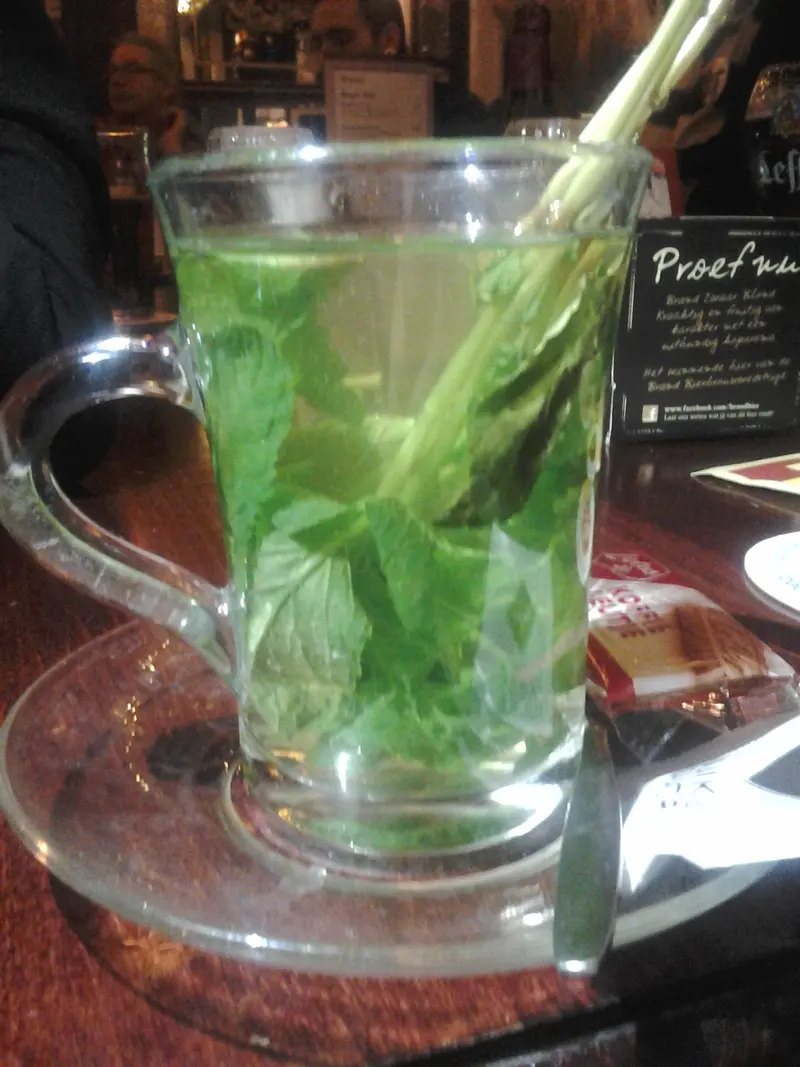
Fresh mint tea
A handful of fresh mint steeped in hot water. Strictly an infusion (tisane) rather than tea: no tea leaves, no caffeine.
Photo: Mark Jason Dominus, CC BY-SA 3.0
If you're hosting this winter, a pan of something warm and alcohol-free alongside the mulled wine means drivers and non-drinkers aren't left with a glass of squash. A flask of hot chocolate or tea is a better companion than a hip flask on a cold walk or at the fireworks.
And for those who do want a warming drink at home at the end of the evening, with no plans to go anywhere, our hot toddy and mulled cider recipes are there. Enjoy them indoors, in moderation, and not as a way of warming up after getting cold.
If drinking is becoming a worry, for you or someone else, Drinkline is the national alcohol helpline; the number and current opening hours are in our drinking responsibly guide.
Sources
Checked when this entry was written. Links open the original source in a new tab.
Checked 23 November 2026.