Once Christmas is over, cider country has one more celebration to come. Wassailing is an old midwinter custom of toasting the apple trees. Here is a short history, drawn from the National Trust, and some thoughts on joining in sensibly.
What the word means
The National Trust says "wassail" is believed to come from the Old English was hál, meaning "be hale", or good health. At heart, a wassail is a toast.
Twelfth Night and the orchard
The National Trust describes wassailing as a Twelfth Night tradition with pagan roots, practised in Britain for centuries, mainly where apples and pears are grown. Its purpose, the Trust says, was "to encourage the spirits into ensuring a good harvest the following season."
It explains the timing too. Christmas used to last twelve days and ended with feasting on 5 January, the eve of Epiphany, after the fasting period of Advent.
There were two kinds of wassail:
- The orchard wassail. Revellers went to the orchards and fruit trees, sang and made a racket, often banging pots and pans. The aim was to ward off bad spirits and please the spirits of the trees so they would crop well. The orchard owner rewarded them with a warm, spiced alcoholic drink from a shared bowl or cup, sometimes topped with apple, a drink called "lamb's wool".
- The house-visiting wassail. Groups went from door to door, drinking toasts and wishing the people inside good health for the year ahead.
The National Trust's photographs from a wassail at Saddlecombe Farm in West Sussex show slices of cider-soaked toast tied into the branches of an apple tree afterwards.
The songs
The National Trust names two best-known wassailing songs: "The Gloucestershire Wassail Song" and "The Wassailer's Carol". It also notes that Blur recorded "The Gloucestershire Wassail Song" in 1992 as "The Wassailing Song".
The bowls
The communal bowl was the centrepiece. The National Trust explains that Christmas celebrations were banned under Cromwell's Puritan rule, and that when festivities returned after the Restoration in 1660, many of the wassail bowls and cups that survive today were made, in the last four decades of the 17th century. Some were turned from lignum vitae, which the Trust describes as the hardest and heaviest commercial wood and well suited to holding hot drinks; the first lignum vitae bowls seem to date from the second quarter of the 17th century. A Restoration-period example is at Dyrham Park in Gloucestershire.
Cider for the occasion
Cider is the natural drink for an orchard wassail, warm or cold. If you want to know what's in the glass, our guide to cider and perry explains the difference between the two and how they're made.
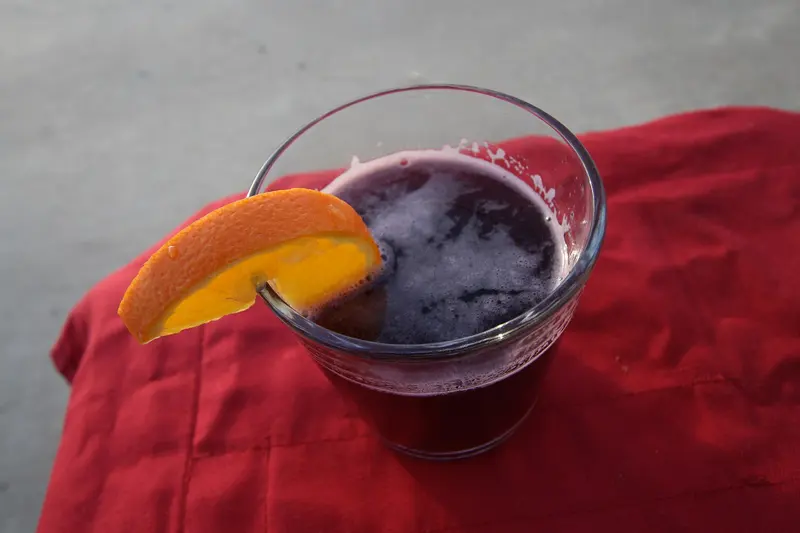
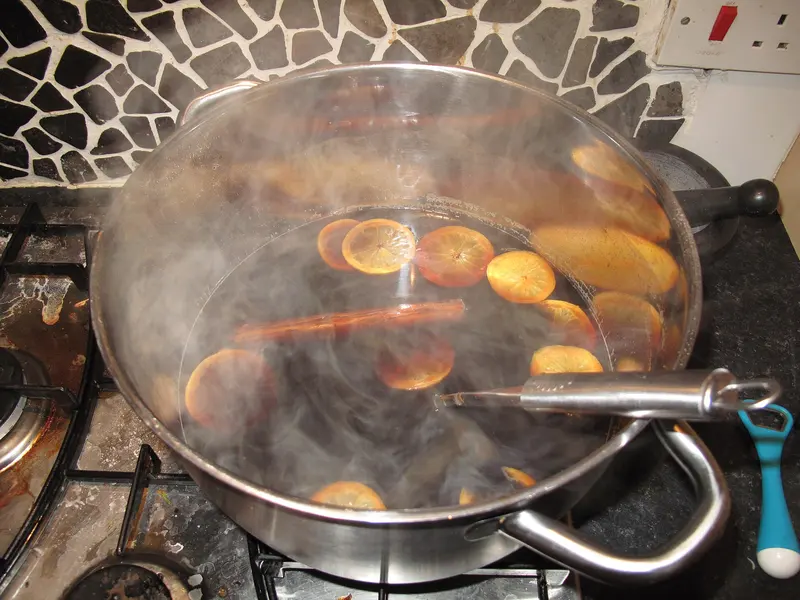
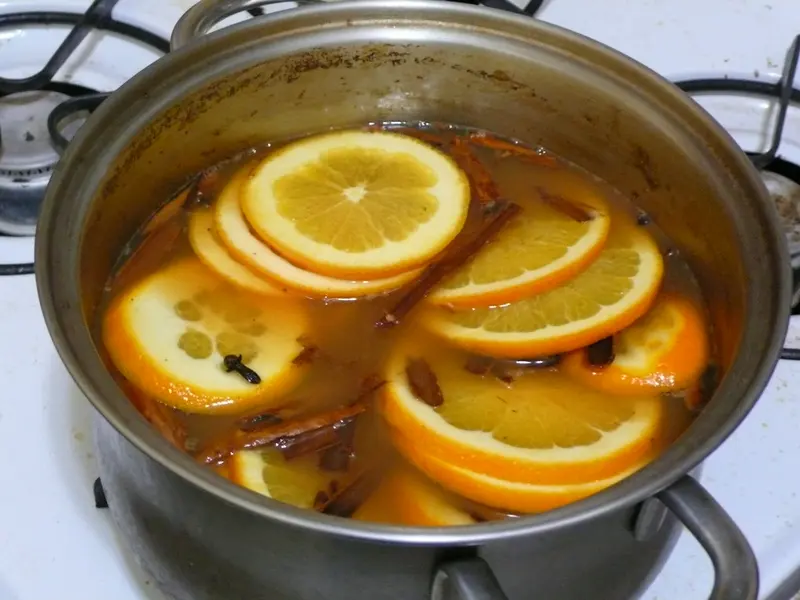
For a warm bowl at home, our mulled cider is gently heated dry cider with apple, orange, brown sugar and whole spices, a recipe for four:
No. 010 · Cider
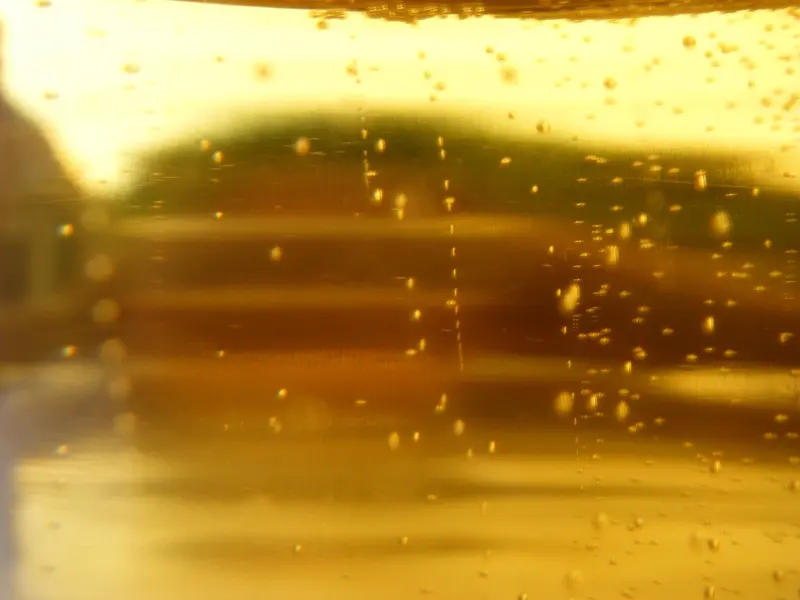
Mulled Cider
Dry cider gently warmed with apple, orange, brown sugar and whole spices: a house recipe for four.
Photo: mlcastle, CC BY-SA 2.0
No. 008 · Cider
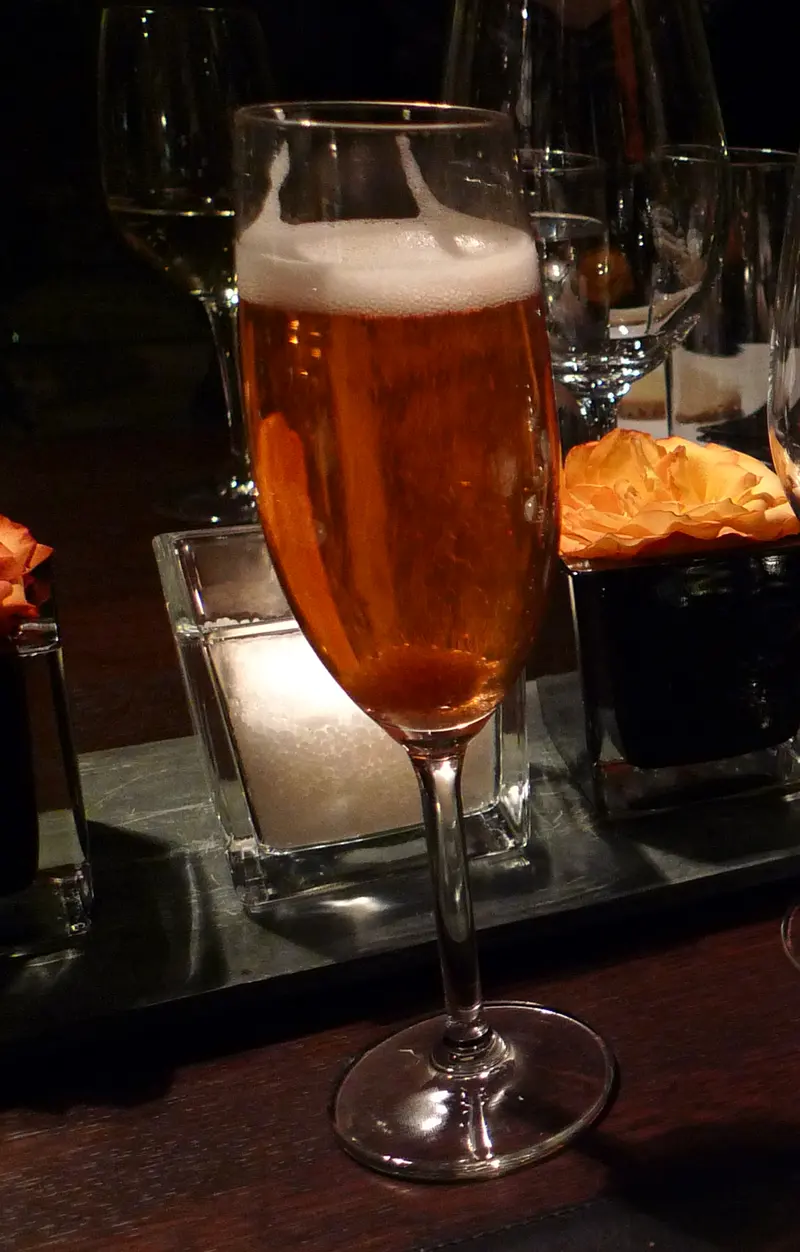
A pint of cider
Cider, the fermented juice of apples, served from keg, handpump, box or bottle.
Photo: Cedric Necocrief, CC BY-SA 3.0
No. 009 · Cider
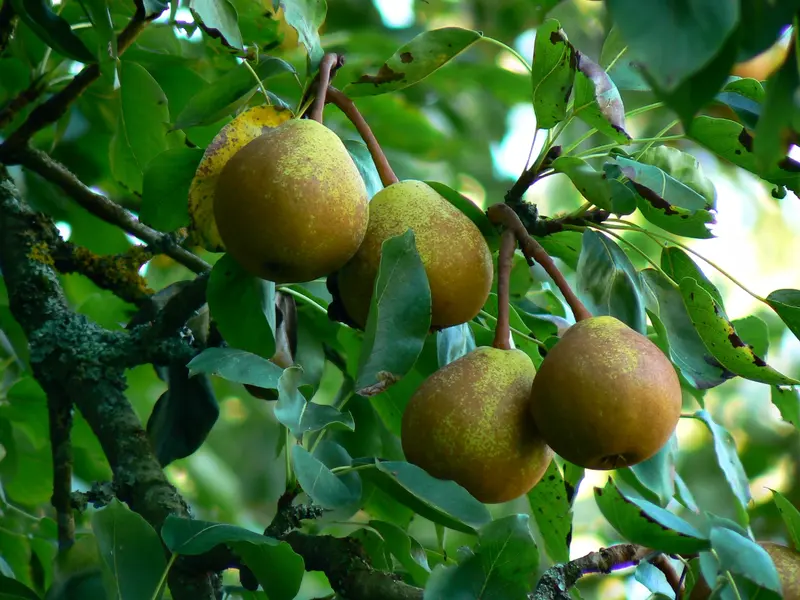
A pint of perry
Perry is made by fermenting perry pears. It tends to be lighter and more floral than cider.
Photo: Brian Robert Marshall, CC BY-SA 2.0
Joining in sensibly
Wassails are outdoor events in January, often after dark, in a muddy orchard, with a warm alcoholic drink being passed round. That combination deserves a little thought:
- Warm drinks don't warm you up. Drinkaware explains that alcohol makes you feel warm by widening blood vessels near the skin, while your core temperature can drop. Dress for the cold; see our post on whether a drink keeps out the cold.
- Plan your way home. If you're driving, the UK Chief Medical Officers' advice is to avoid alcohol altogether; our drink-driving guide explains why.
- Know your units. The low-risk guideline is no more than 14 units a week, spread over three or more days. Our guide to drinking responsibly explains how to count them.
- Have an alcohol-free option. If you're hosting a wassail of your own, a warm spiced apple juice or a pan of hot chocolate means children, drivers and anyone having a dry January can raise a cup too.
No. 095 · Mocktail
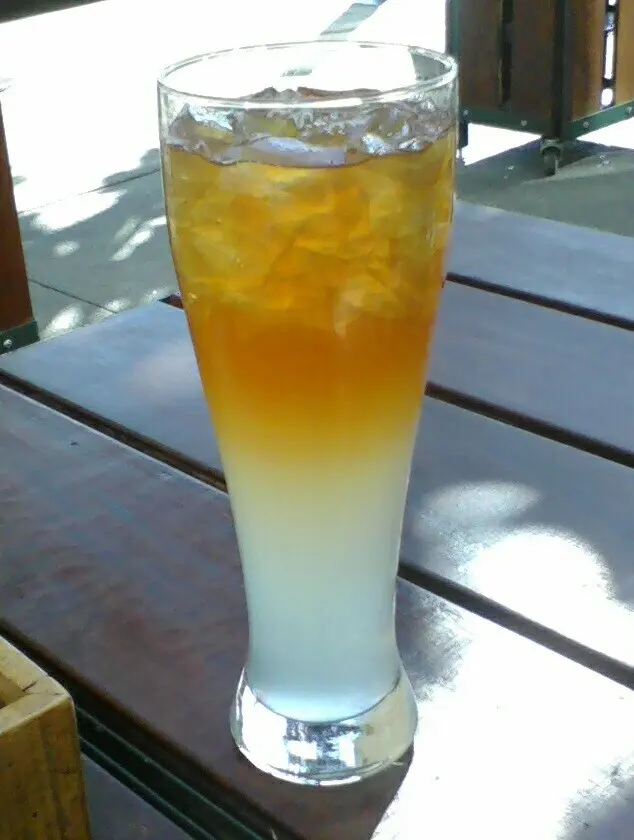
Arnold Palmer
Half iced tea, half lemonade over ice: a simple, refreshing non-alcoholic mix named after the golfer.
No. 103 · Mocktail
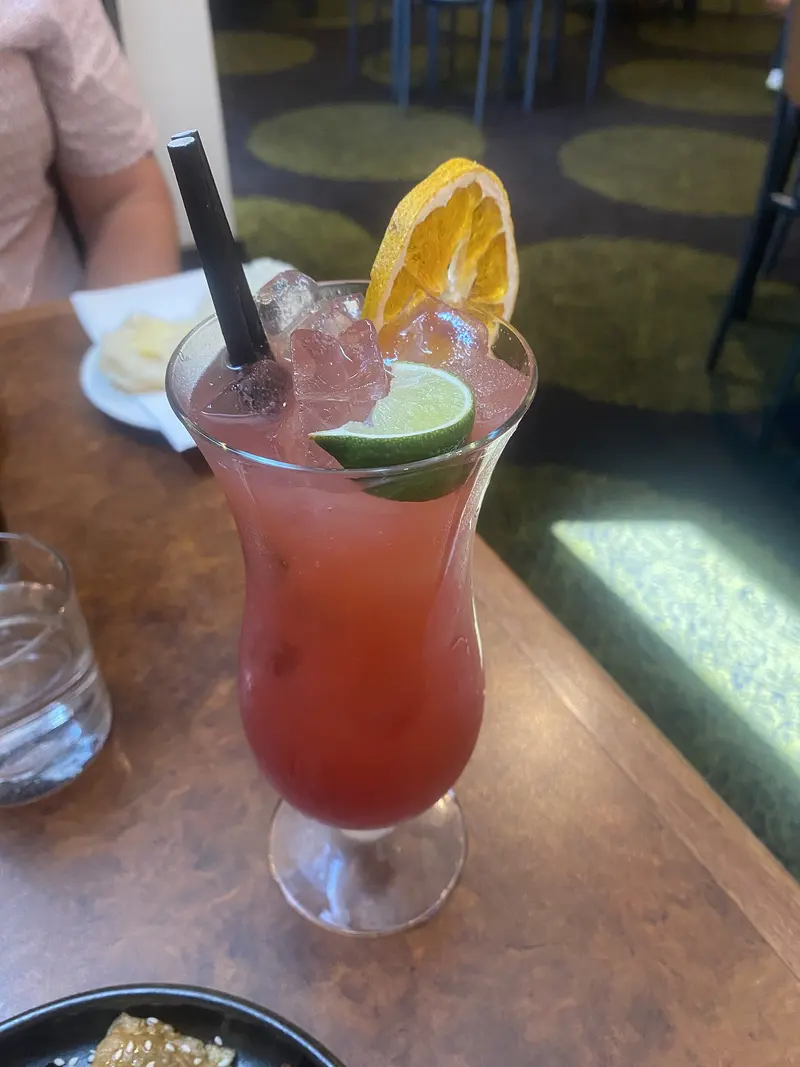
Cinderella
Orange, pineapple and lemon juices shaken with grenadine, then lengthened with soda water.
Photo: RegionVisitor90, CC0
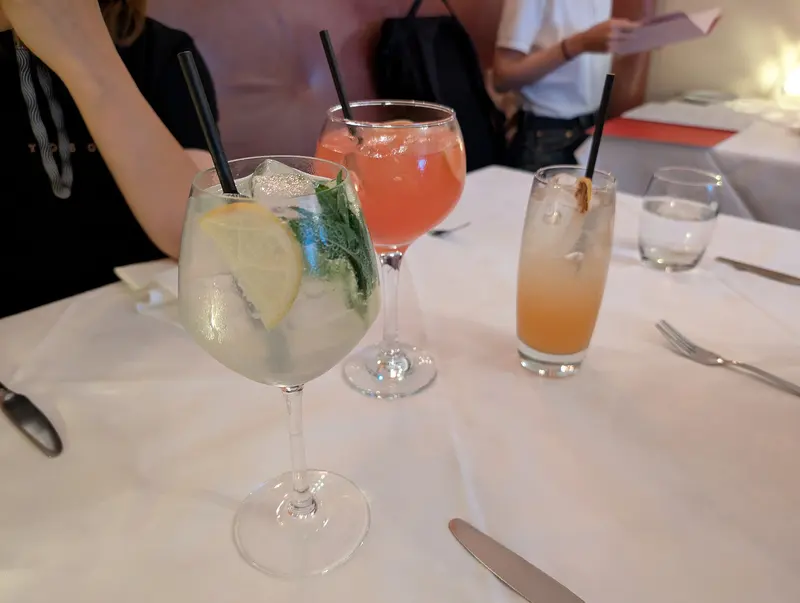
No. 098 · Mocktail
Cucumber and mint cooler
Muddled cucumber and mint shaken with lime and sugar syrup, strained over ice and topped with soda.
Finding a wassail
If you'd like to go to one, look out for events run by local cider makers, community orchards and heritage sites, and check the organiser's own page for dates, tickets and whether it's suitable for children.
Sources
- National Trust: Wassailing — ritual and revelry
- Drinkaware: Alcohol and cold weather (reviewed 21 October 2024)
Checked when this entry was written. Links open the original source in a new tab.
Checked 23 November 2026.