Christmas is the one time of year when many people who never make cocktails reach for the shaker. The festive classics are mostly simple, and several are built on sparkling wine, which makes them quick to pour for a group. Here is a day's worth from our recipes, with the units in each, so you can enjoy them and still know where you stand.
Christmas morning
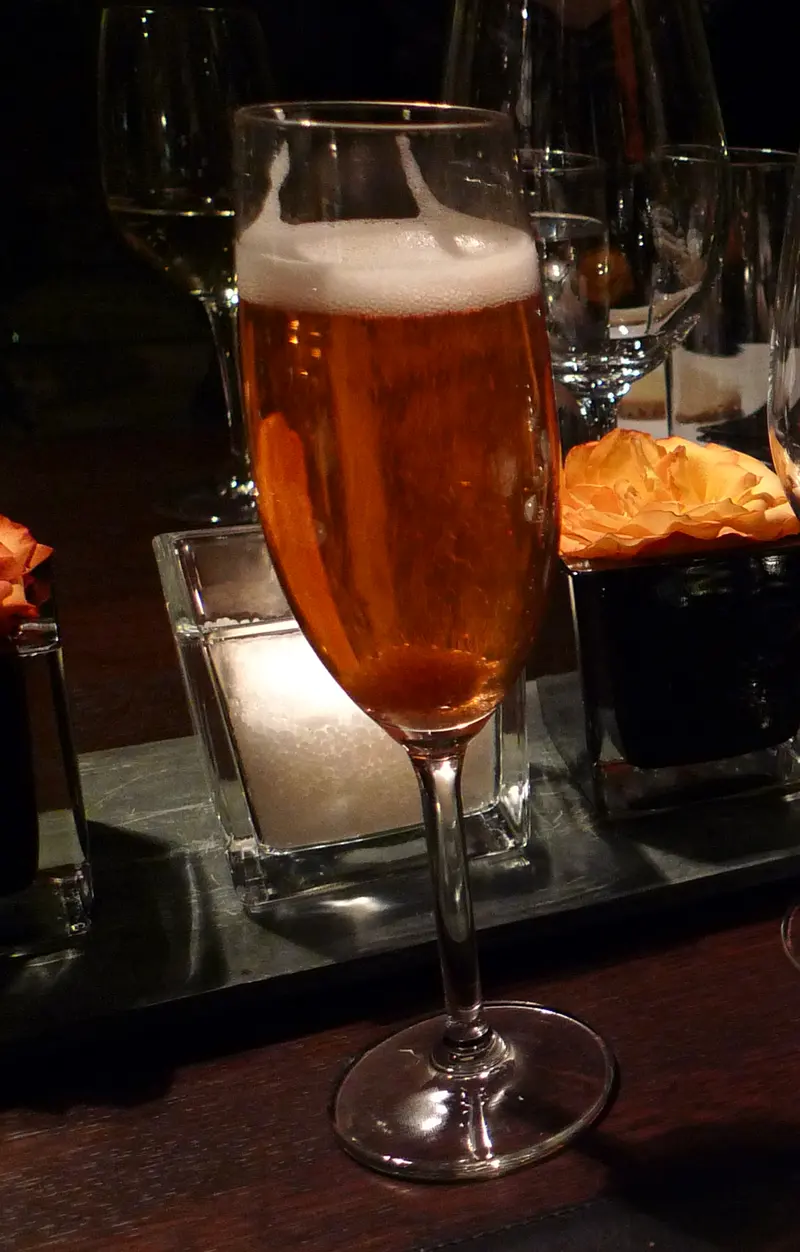
The drink of Christmas morning in many British homes is Buck's Fizz. Our Mimosa follows the IBA specification, which notes that the Mimosa is also known as Buck's Fizz: equal parts fresh orange juice and Prosecco, 75 ml of each, in a flute. Pour the juice first, then the wine gently, and give it the lightest stir. A Bellini uses white peach purée instead.
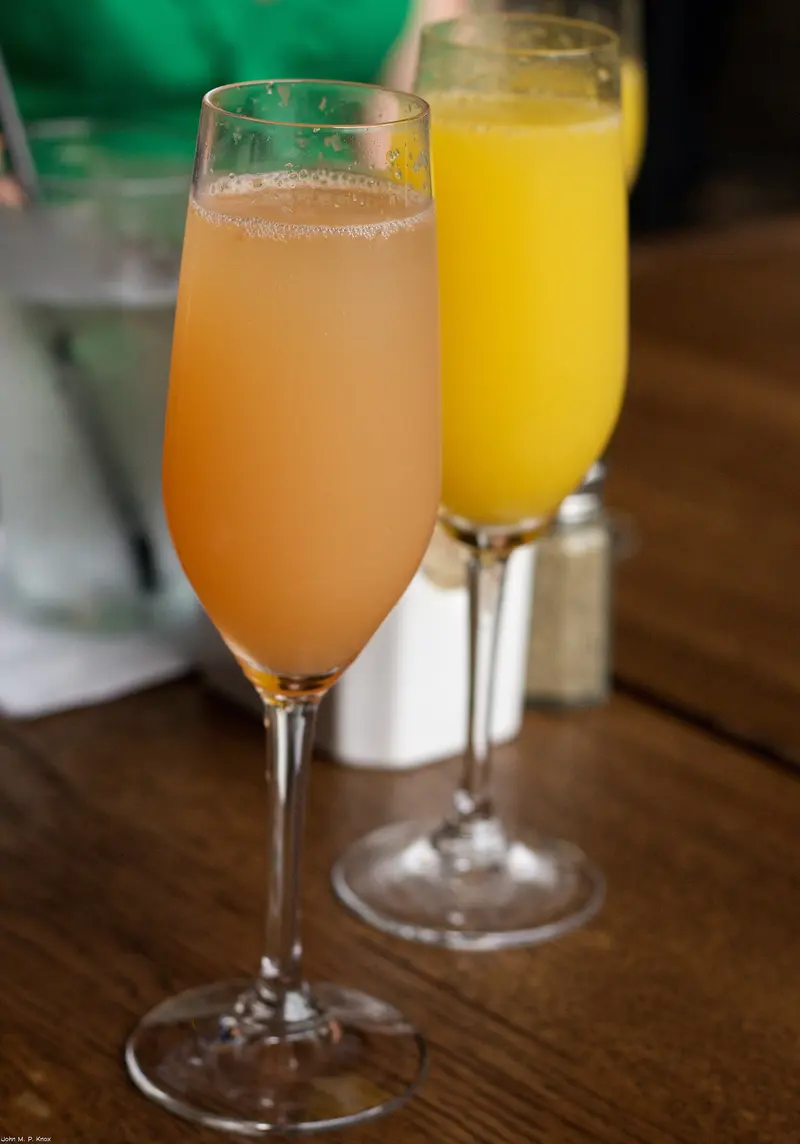
No. 048 · Cocktail · IBA
Mimosa
Equal parts fresh orange juice and Prosecco in a flute. The IBA notes it's also known as Buck's Fizz.
Photo: John Knox, CC BY-SA 2.0
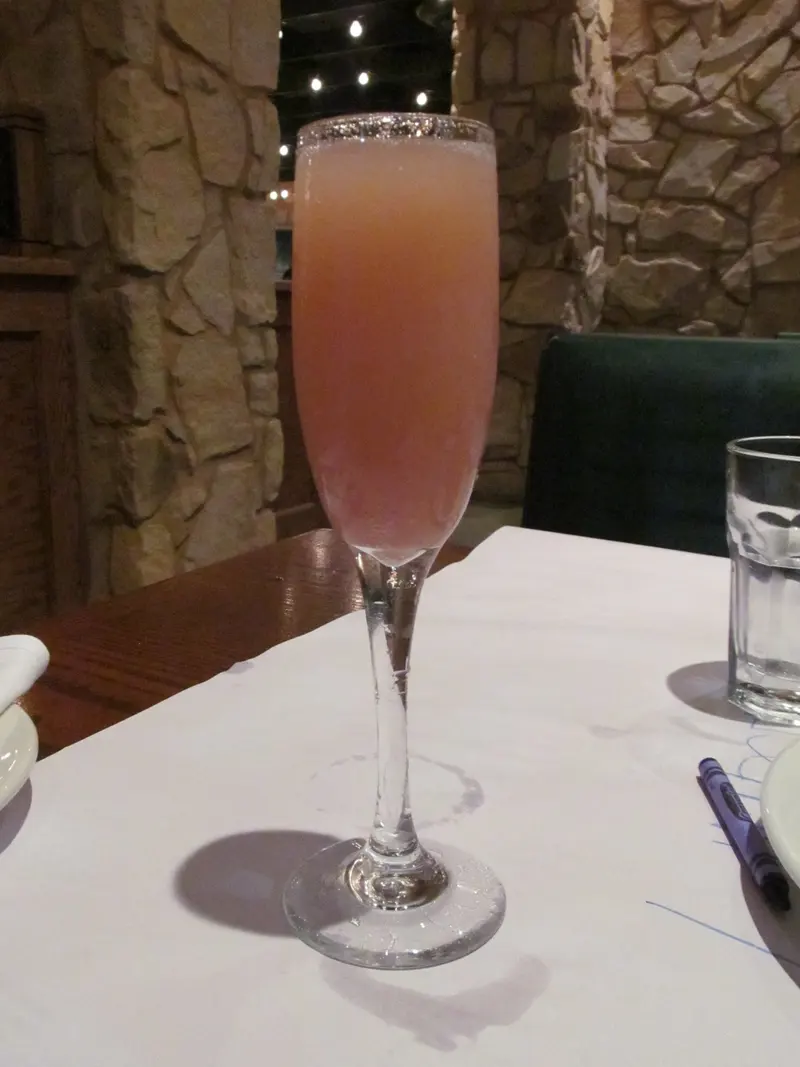
No. 036 · Cocktail · IBA
Bellini
White peach purée and Prosecco gently stirred and poured into a chilled flute.
Photo: John Phelan, CC BY-SA 3.0
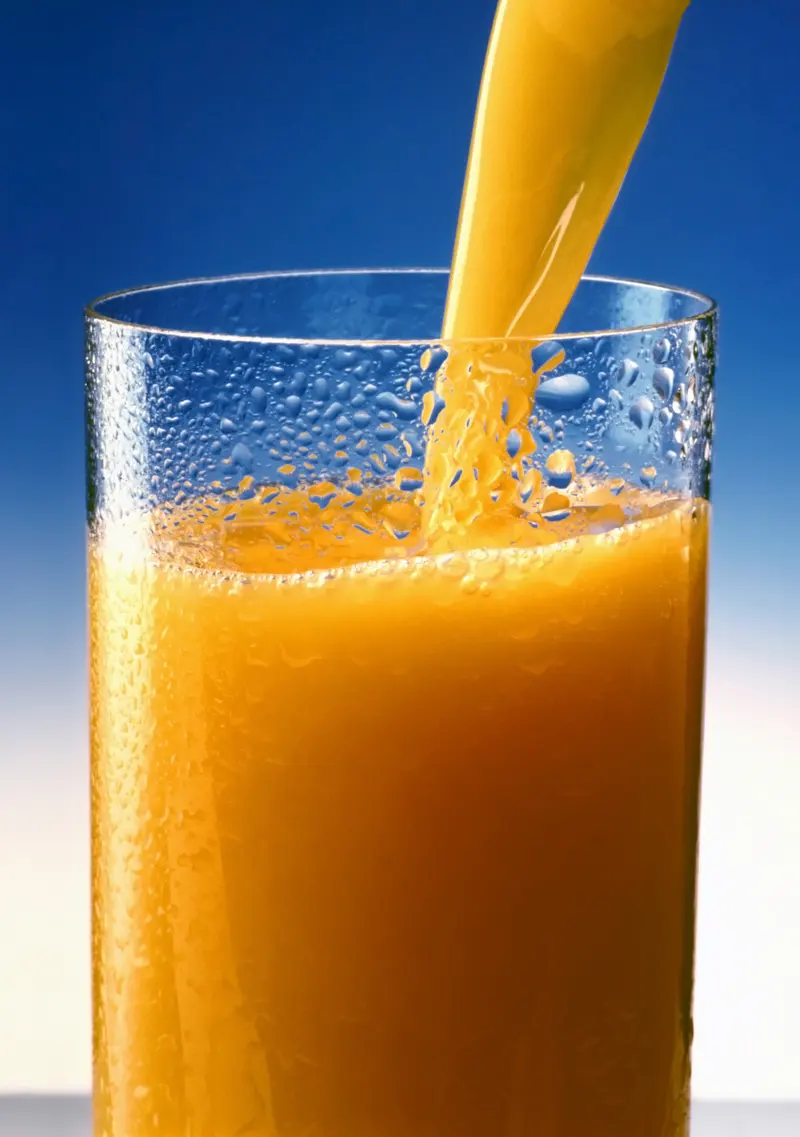
No. 096 · Mocktail
St Clement's
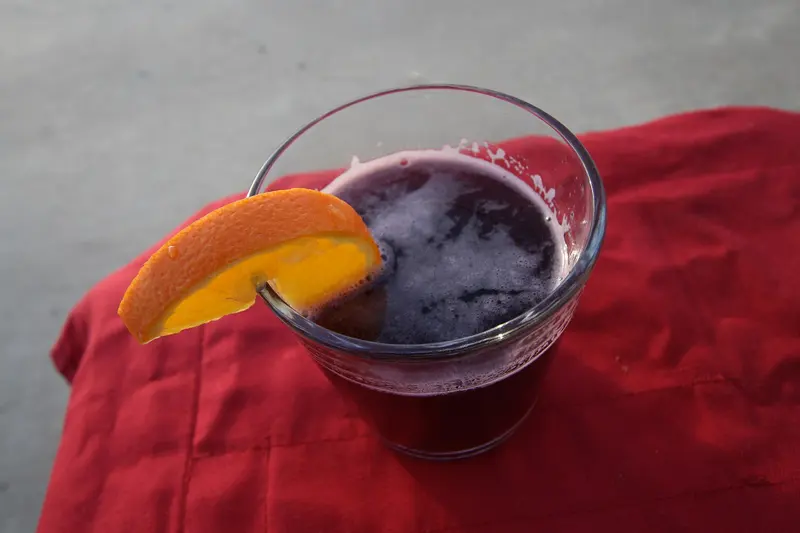
Orange juice and bitter lemon in equal parts over ice: a bittersweet British soft drink.
Photo: US Department of Agriculture (edited by Arad), Public domain
For anyone not drinking, or children wanting a glass to match, a St Clement's of orange juice and bitter lemon looks the part.
Before lunch
Sparkling wine is the backbone of the festive aperitif:
- The Champagne Cocktail is a sugar cube soaked in Angostura bitters, a little cognac and chilled Champagne. The sugar dissolves slowly and keeps a stream of bubbles rising.
- The French 75 shakes gin, lemon and sugar syrup, then tops the drink with Champagne in a flute.
- A Kir is crème de cassis topped with dry white wine. Made with Champagne, the IBA notes, it becomes a Kir Royal.
- The Black Velvet mixes or layers stout and sparkling wine. It is said to have been first made at Brooks's Club in London in 1861, to mourn the death of Prince Albert.
No. 039 · Cocktail · IBA
Champagne Cocktail
A bitters-soaked sugar cube and a little cognac, topped with chilled Champagne.
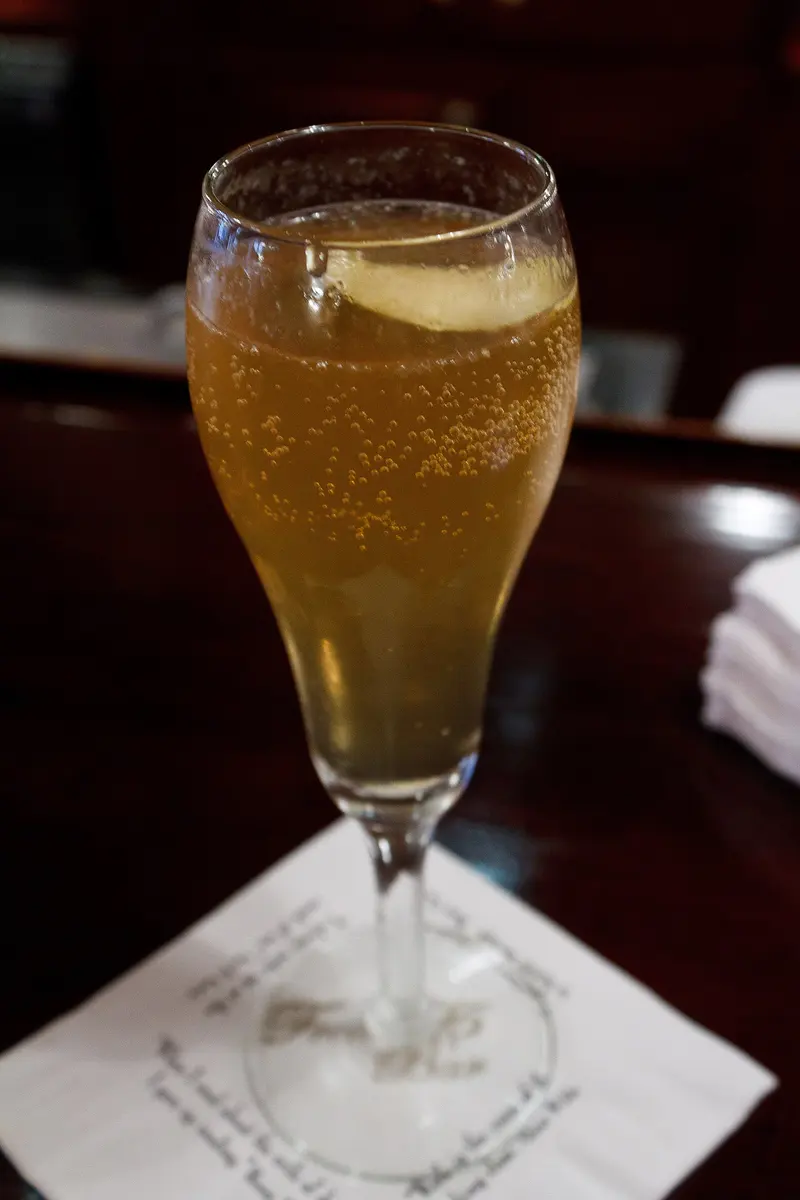
No. 042 · Cocktail · IBA
French 75
Gin, lemon and sugar syrup shaken, strained into a flute and topped with Champagne.
Photo: https://www.flickr.com/people/garyjwood/, CC BY-SA 2.0
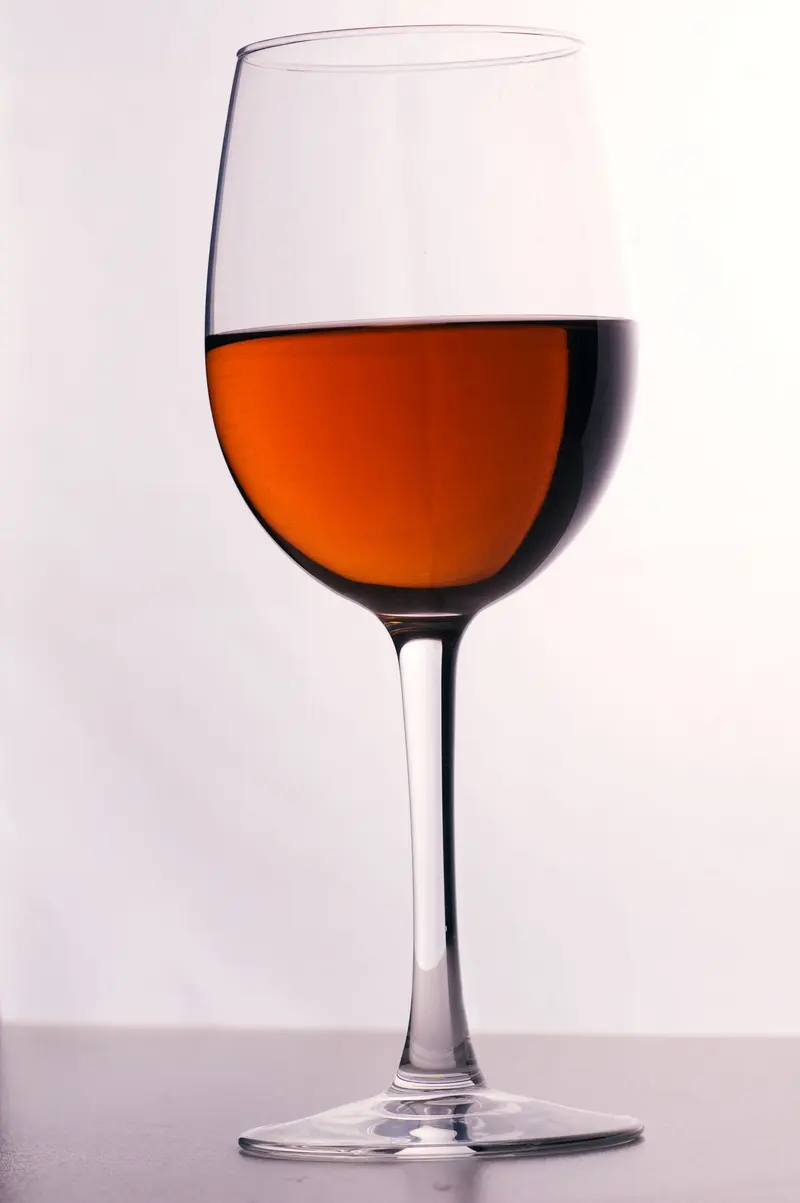
No. 044 · Cocktail · IBA
Kir
Crème de cassis topped with dry white wine. Use Champagne and it becomes a Kir Royal.
No. 007 · Beer
Black Velvet
Stout and Champagne in equal parts, served without ice. A Victorian-era London drink.
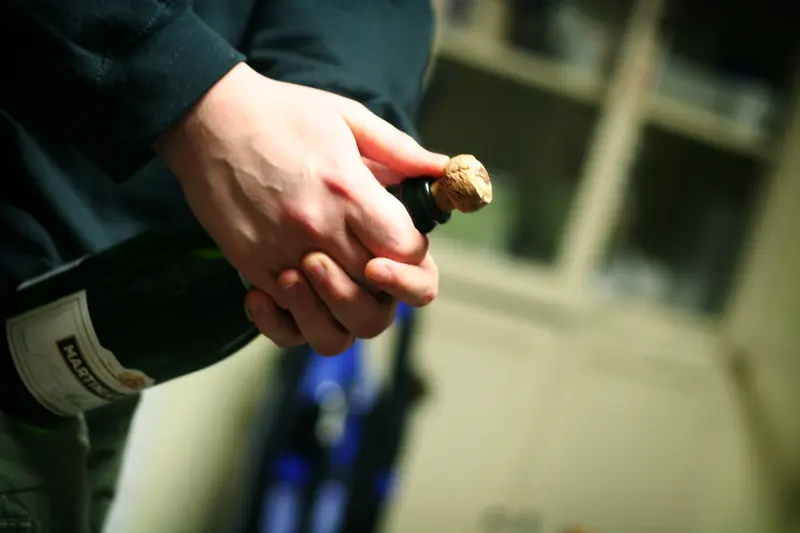
Before you open the bottles, read our post on opening sparkling wine safely. A flying cork can injure an eye.
After dinner
Christmas pudding calls for something rich, or something short and strong:
- The Alexander is cognac, brown crème de cacao and cream shaken hard and finished with freshly grated nutmeg. It was originally made with gin; the brandy version is often called a Brandy Alexander.
- The Snowball is advocaat and lemonade in roughly equal parts, with a squeeze of lime. Advocaat is an egg-based liqueur.
- The Espresso Martini shakes vodka, coffee liqueur, sugar syrup and fresh espresso. It contains caffeine.
- The Rusty Nail is Scotch whisky and Drambuie stirred over ice.
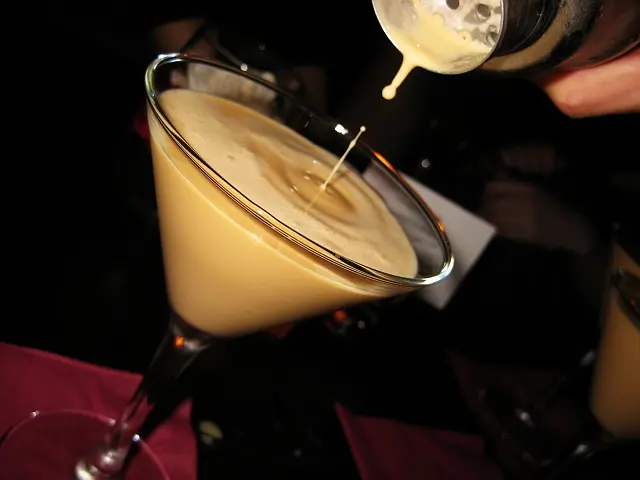
No. 032 · Cocktail · IBA
Alexander
Cognac, brown crème de cacao and fresh cream shaken and dusted with nutmeg.
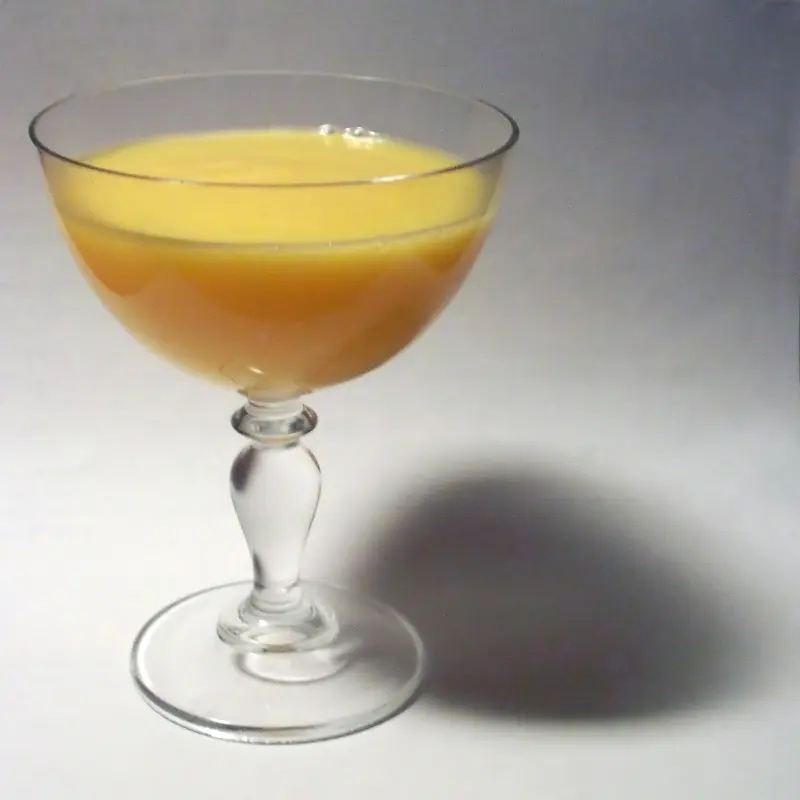
No. 014 · Cocktail
Snowball
Advocaat and fizzy lemonade in roughly equal parts, with a squeeze of lime. Advocaat contains egg.
Photo: Tobias R. – Metoc, CC BY-SA 2.5
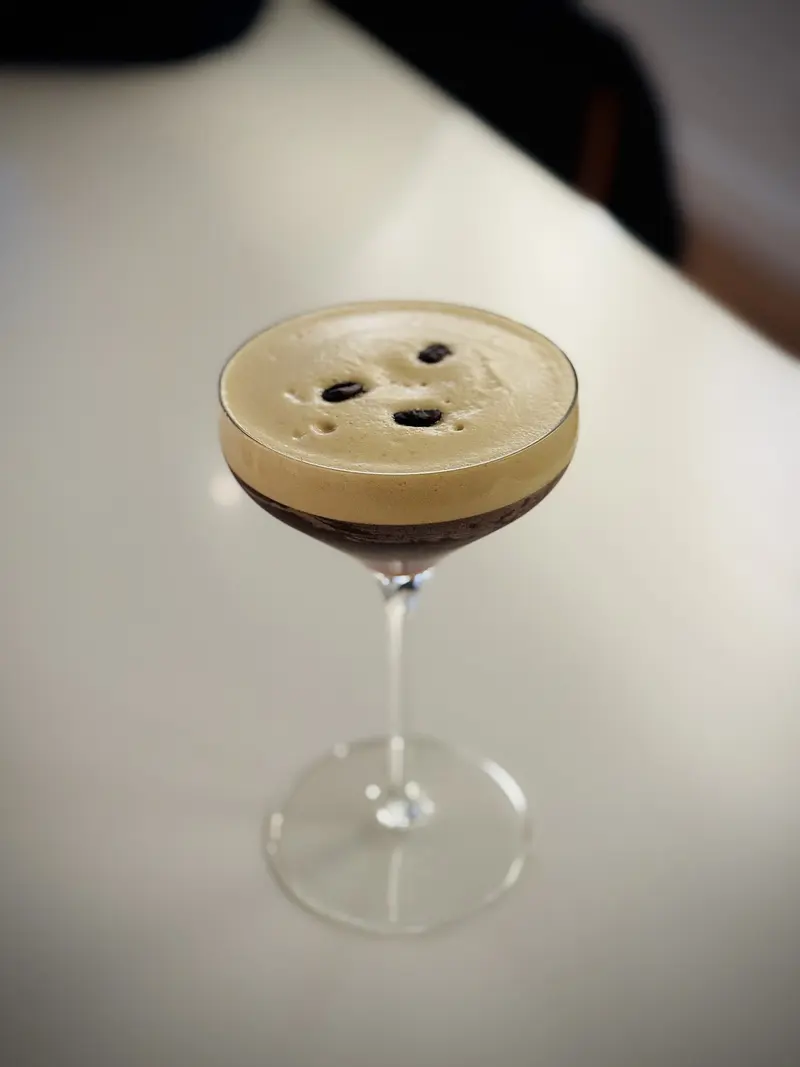
No. 057 · Cocktail · IBA
Espresso Martini
Vodka, coffee liqueur, sugar syrup and fresh espresso shaken hard for a creamy foam. Contains caffeine.
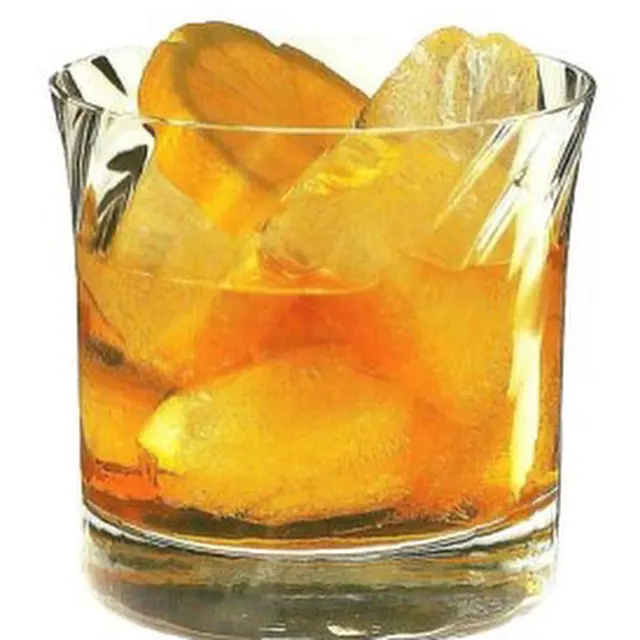
No. 035 · Cocktail · IBA
Rusty Nail
Scotch whisky and Drambuie stirred over ice: honeyed and warming.
Photo: Brian Child, CC BY-SA 2.0
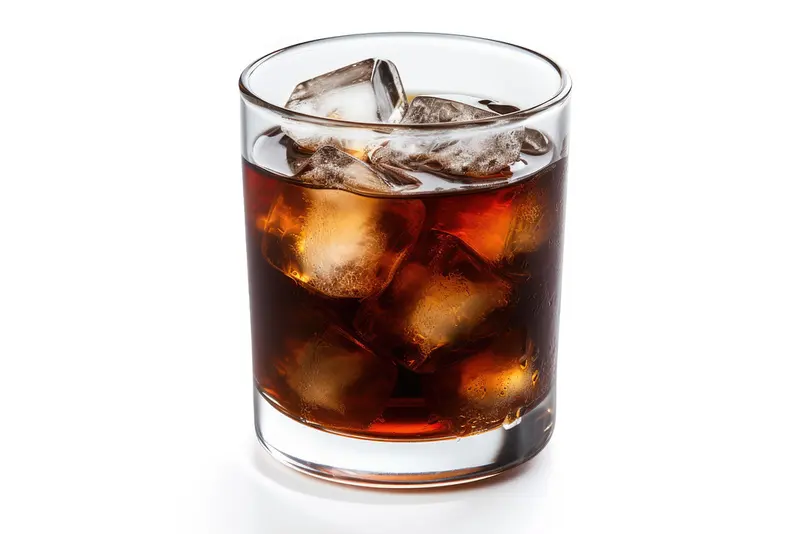
No. 056 · Cocktail · IBA
Black Russian
Vodka and coffee liqueur over ice. Float cream on top and it becomes a White Russian.
Photo: ccnull.de Bilddatenbank, CC BY 2.0
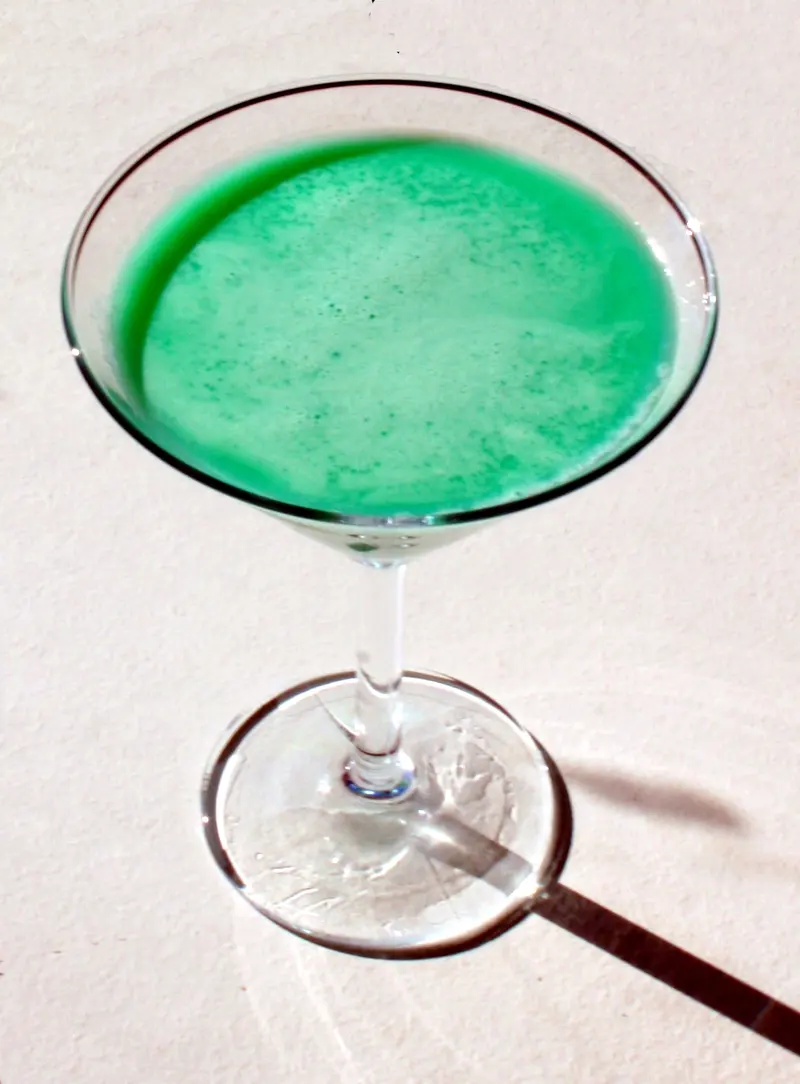
No. 068 · Cocktail · IBA
Grasshopper
White crème de cacao, green crème de menthe and cream shaken: a minty, chocolatey after-dinner drink.
Photo: TexasDex, CC BY-SA 3.0
The cream in an Alexander or Grasshopper and the egg in a Snowball's advocaat are allergens. If you're serving guests with allergies, see our post on allergens in drinks.
How many units?
Our recipes give every measure in millilitres, so you can use the NHS formula: strength (ABV %) × volume (ml) ÷ 1,000 = units. Assuming 40% for spirits, 12% for Champagne and white wine, 11% for Prosecco and 4% for stout (check your own bottles, as strengths vary):
- Mimosa: 75 ml Prosecco, about 0.8 units.
- Bellini: 100 ml Prosecco, about 1.1 units.
- Champagne Cocktail: 90 ml Champagne and 10 ml cognac, about 1.5 units.
- French 75: 30 ml gin and 60 ml Champagne, about 1.9 units.
- Black Velvet: 75 ml Champagne and 75 ml stout, about 1.2 units.
- Kir: 90 ml white wine, about 1.1 units, plus the cassis.
- Alexander: 30 ml cognac, 1.2 units, plus the crème de cacao.
- Rusty Nail: 45 ml Scotch, 1.8 units, plus the Drambuie.
- Espresso Martini: 50 ml vodka, 2 units, plus the coffee liqueur.
- Snowball: advocaat is far weaker than a spirit, but brands differ, so work it out from the label.
Liqueurs vary too much to give one figure, so read the ABV on the bottle. Over a long day the units add up quickly: three or four drinks from the list above can come close to half the UK Chief Medical Officers' weekly guideline of 14 units.
Making them for a crowd
- Measure with a jigger. Free-pouring at a party is how drinks get stronger as the evening goes on.
- Chill everything. Keep the sparkling wine, the glasses and the mixers cold, and have plenty of ice; see our guide to ice.
- Make sugar syrup ahead. Several of these recipes use it; our guide to home bar basics explains how.
- Pick a few, not all. Two or three drinks you can make well beat a long menu.
- Jigger Search Amazon.co.uk for Jigger (opens Amazon in a new tab)
- Cocktail shaker Search Amazon.co.uk for Cocktail shaker (opens Amazon in a new tab)
- Champagne flute Search Amazon.co.uk for Champagne flute (opens Amazon in a new tab)
- Coupe glass Search Amazon.co.uk for Coupe glass (opens Amazon in a new tab)
Amazon links search Amazon.co.uk, so you can compare options yourself. As an Amazon Associate I earn from qualifying purchases.
Pacing the day
The NHS tips for cutting down work well for a long Christmas day: decide on a limit before you start, eat before and while drinking, and alternate alcoholic drinks with water or soft drinks. If anyone is driving later, or the next morning, read our guide to drink-driving and the morning after. For drinks they'll enjoy just as much, see alcohol-free Christmas drinks.
Sources
- NHS: Alcohol units (reviewed 27 August 2024)
- UK Chief Medical Officers' Low Risk Drinking Guidelines (August 2016)
- NHS: Tips on cutting down alcohol (reviewed 9 April 2026)
Checked when this entry was written. Links open the original source in a new tab.
Checked 23 November 2026.