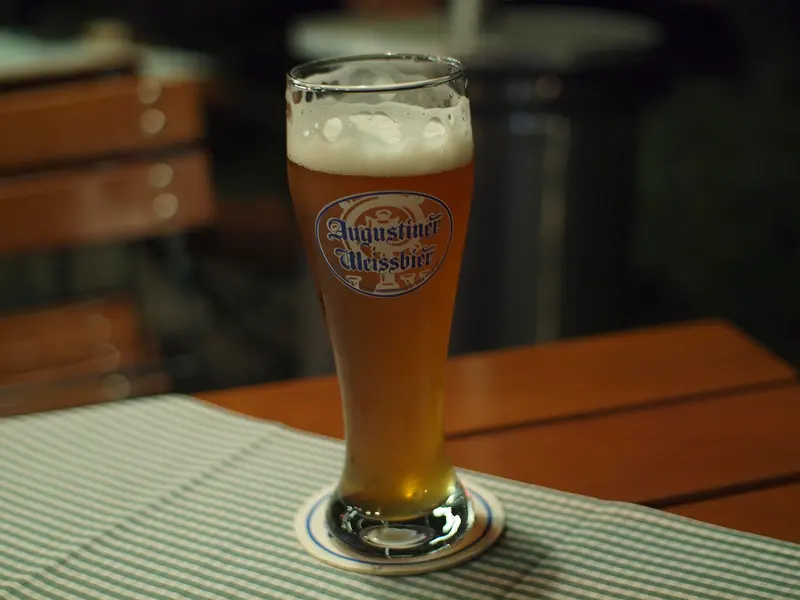
Pouring beer into a glass isn't just about looks. The Cicerone Certification Program points out that it lets you enjoy the beer's appearance and aroma (both part of the flavour), releases some carbonation so you feel less bloated, lets you pour a bottle-conditioned beer off its yeast, and means a large bottle can be shared.
Serving temperature
Cask Marque suggests serving bottled beers at 4–6°C. Some styles are better a little warmer: the wheat beer brewer Erdinger recommends 7–9°C for its beers.
The basic pour
- Start with a clean glass (see the 'beer-clean' tests in our perfect pint guide).
- Hold the glass at about 45° and pour down the side.
- As the glass fills, bring it upright and pour down the middle to create a head.
- Stop with enough room for the head to settle just below the rim.
Cans pour in exactly the same way. Rather than drinking from the can, pour it so you get the aroma.
Bottle-conditioned beer and sediment
Bottle-conditioned beers finish fermenting in the bottle and have a layer of yeast at the bottom. It's harmless, but it changes the look and taste. To leave it behind:
- Pour steadily without stopping and starting, so you don't stir up the sediment.
- Watch the neck of the bottle and stop pouring as the yeast moves towards the top.
If you want the yeast, pour two-thirds of the beer normally, stop, swirl the bottle gently to mix the yeast into the rest, then pour it down the middle of the glass.
The wheat beer pour
German wheat beers are meant to be served cloudy, with the yeast. Erdinger's own three steps:
- Rinse the glass with clean water, hold it at a slight angle and pour slowly. The bottle neck must not dip into the beer or touch the glass.
- Slowly tilt the glass upright and keep pouring as the head grows. Leave about a finger-width of beer in the bottle.
- Gently swirl the bottle and pour the yeast into the glass. According to the brewer, the yeast rounds off the flavour and gives the natural cloudiness.
Skip the frosted glass
Frozen glasses can cause excessive foaming, chill the beer so much that you taste less, and may leave a thin frozen layer of whatever the glass was washed with. A clean glass at room temperature, or rinsed with cold water, is better.
See also: bottled or canned beer, wheat beer, beer styles and glassware.
Sources
- Cicerone Certification Program — Certified Beer Server Prep Talks #7
- Cask Marque — Beer temperature
- Erdinger Weissbräu — How to pour the perfect Erdinger wheat beer
Checked when this entry was written. Links open the original source in a new tab.