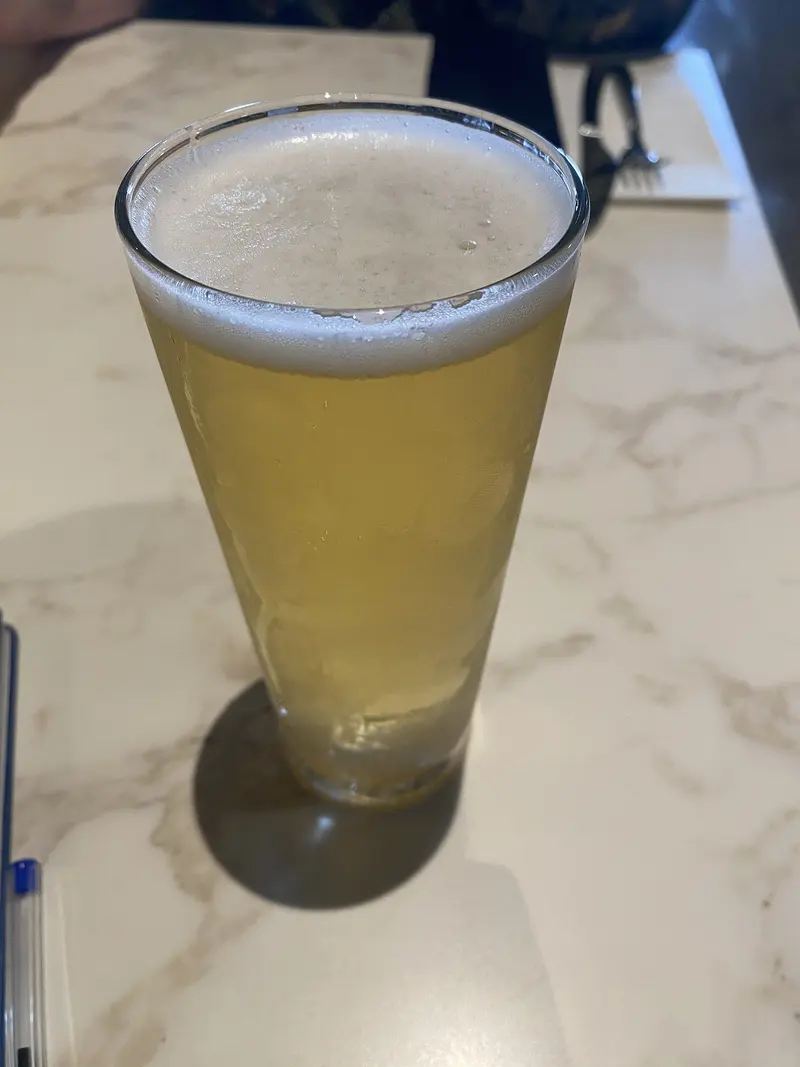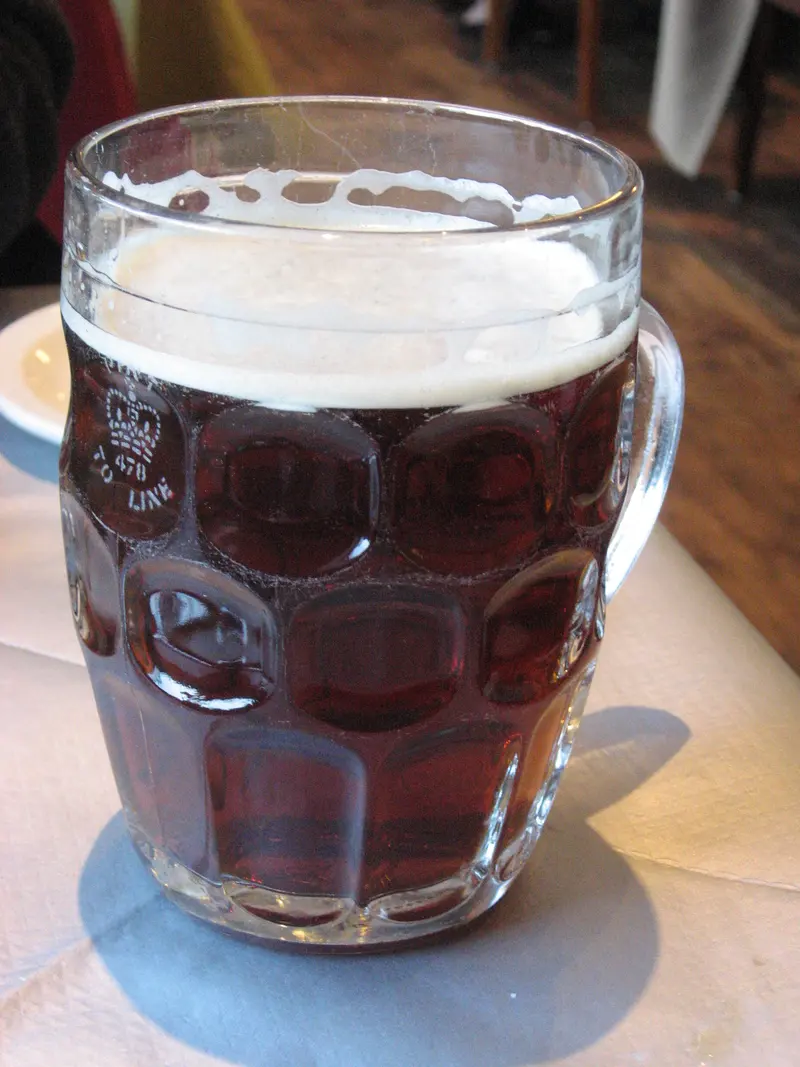
A good pint starts long before the tap: in a clean glass, a well-kept cellar and beer at the right temperature. This guide covers the three pours you'll meet in a British pub: cask ale pulled through a handpump, keg beer from a tap, and the two-part pour used for draught stout.
Cask or keg?
Cask-conditioned ale, which CAMRA calls 'real ale', finishes maturing in the pub cellar. Live yeast in the cask gives the beer its 'condition' (its gentle natural carbonation) over up to a week, and it is served without injected carbon dioxide. That's why it is drawn up by hand through the tall handpumps on the bar.
Keg beer is served chilled and carbonated, pushed to the tap by gas pressure, so the skill is controlling the foam.
Get the temperature right
Cask Marque, which audits the quality of beer served in pubs, gives these dispense temperatures:
- Cask ale: 11–13°C, the temperature most brewers recommend (Cask Marque's audits allow 10–14°C).
- Standard lagers and keg beers: 5–8°C.
- 'Extra cold' products: 0–5°C.
Too warm and cask ale gives off unplanned aromas; too cold and its fresh, vibrant flavours are lost.
Start with a 'beer-clean' glass
Bubbles clinging to the inside of the glass, a poor head or a head that quickly collapses are signs of a glass that isn't properly clean. The Cicerone Certification Program suggests two quick checks:
- Sheeting test: wet the glass and tip the water out. On a clean glass it sheets off evenly; on a dirty one it runs in rivulets and leaves droplets.
- Salt test: wet the inside and sprinkle with salt. Salt sticks evenly to a clean glass; bare patches show dirty spots.
Pulling cask ale with a sparkler
A sparkler is a small nozzle on the end of the spout that forces beer through tiny holes, creating a tight, creamy head. Timothy Taylor's Brewery publishes this method, its '5 STARS Perfect Pour':
- Take a perfectly clean glass and make sure a sparkler is fitted to the spout and can reach the bottom of the glass.
- Touch the sparkler to the bottom of the glass.
- Use a strong, confident first pull, then steady, consistent pulls to fill the glass to two-thirds.
- Let the beer settle for a full minute (the brewery's 'Sixty Second Settle').
- With the sparkler below the head, about halfway down the glass, top up steadily, finishing with a tight 1 cm head.
- Serve holding the bottom third of the glass. It's ready to drink once it has settled and is clear.
The North–South divide
As CAMRA explains, in most pubs in the North and the Midlands cask ale is poured through a sparkler on a long 'swan-neck' spout: the glass is held upright, the sparkler sits on the base of the glass and stays below the surface for the whole pour, and the glass is lowered for the last few millimetres to give a domed head.
In the South, particularly the South East, it's often poured without a sparkler from a short spout, much like lager: hold the glass at 45°, keep the spout out of the beer as you pull, and straighten the glass as it fills.
Pouring keg beer
The Cicerone Certification Program's steps for a draught pour:
- Start with a beer-clean glass held at 45°, about 2.5 cm (1 inch) below the tap.
- Grip the tap handle near its base and pull it fully open in one movement. A half-open tap makes beer foam.
- Pour down the side until the glass is about half full, then gently bring it upright and pour down the middle to build the head.
- Close the tap as the foam reaches the rim.
Never let the tap touch the glass or dip into the beer: it's unhygienic.
The two-part pour for draught stout
Draught stout is served with a nitrogen mix that creates its famous cascading 'surge'. The method published by Heineken Malaysia, which brews Guinness in Malaysia:
- Take a cool, dry pint glass and hold it firmly at 45° under the tap.
- Pull the handle fully towards you and slowly straighten the glass as it fills. Stop at three-quarters full.
- Leave the surge to settle so the creamy head forms. It should be 10–15 mm deep.
- Top up by pushing the tap handle away from you, stopping when the head is just proud of the rim.
The brewer says the full pour takes 119.5 seconds.
How much is a pint?
A UK pint is 568 ml (NHS). Draught beer and cider must be sold in a third, a half or two-thirds of a pint, or in multiples of half a pint (GOV.UK).
See also: a pint of cask ale, a pint of keg lager, a pint of stout, how to pour bottled beer and glassware.
Watch
Sources
- Timothy Taylor's Brewery — The 5 STARS Perfect Pour
- CAMRA — Why is there a 'North–South' divide on the way cask ale is served?
- CAMRA — What is cask-conditioned ale?
- Cask Marque — Beer temperature
- Cicerone Certification Program — Certified Beer Server Prep Talks #7
- Heineken Malaysia — Guinness: The Art of Pour
- NHS — Alcohol units
- GOV.UK — Weights and measures: specified quantities
Checked when this entry was written. Links open the original source in a new tab.