A milkshake needs only three things: cold milk, ice cream and a flavour. Get the ratio right, keep everything cold and stop blending as soon as it's smooth, and you'll get a thick, frothy shake every time. Here is the basic recipe we build all our milkshakes on, what each ingredient does, and how to change it.
The basic milkshake recipe
Our vanilla milkshake is the starting point for most of the others. For one tall glass:
- 3 scoops of vanilla ice cream
- 200 ml of cold whole milk
- ½ teaspoon of vanilla extract
- Pour the milk into the blender first, then add the ice cream and vanilla.
- Blend for 20–30 seconds, just until smooth and frothy.
- Pour into a tall, chilled glass and serve straight away with a straw.
Putting the milk in first helps the blades turn freely, so the ice cream breaks up quickly instead of sticking.
Milkshake ingredients and what they do
Ice cream gives the body and most of the sweetness. The ratio of ice cream to milk sets the thickness: more ice cream for a spoonable shake, more milk for one you can drink through a straw. Three scoops to 200 ml is a good middle.
Milk loosens it. Whole milk gives the creamiest result; semi-skimmed works but makes a thinner shake. If you use a plant drink instead, our guide to plant milks explains what the labels mean.
The flavour comes from fruit, sauces, powders or more ice cream. Add it with the ice cream, or blend fruit with the milk first so there are no lumps.
Turning the basic shake into other flavours
Once you have the base, every other shake is a small change:
- Chocolate: use chocolate ice cream and add 2 tablespoons of chocolate sauce, plus a tablespoon of cocoa powder for a deeper flavour. See our chocolate milkshake.
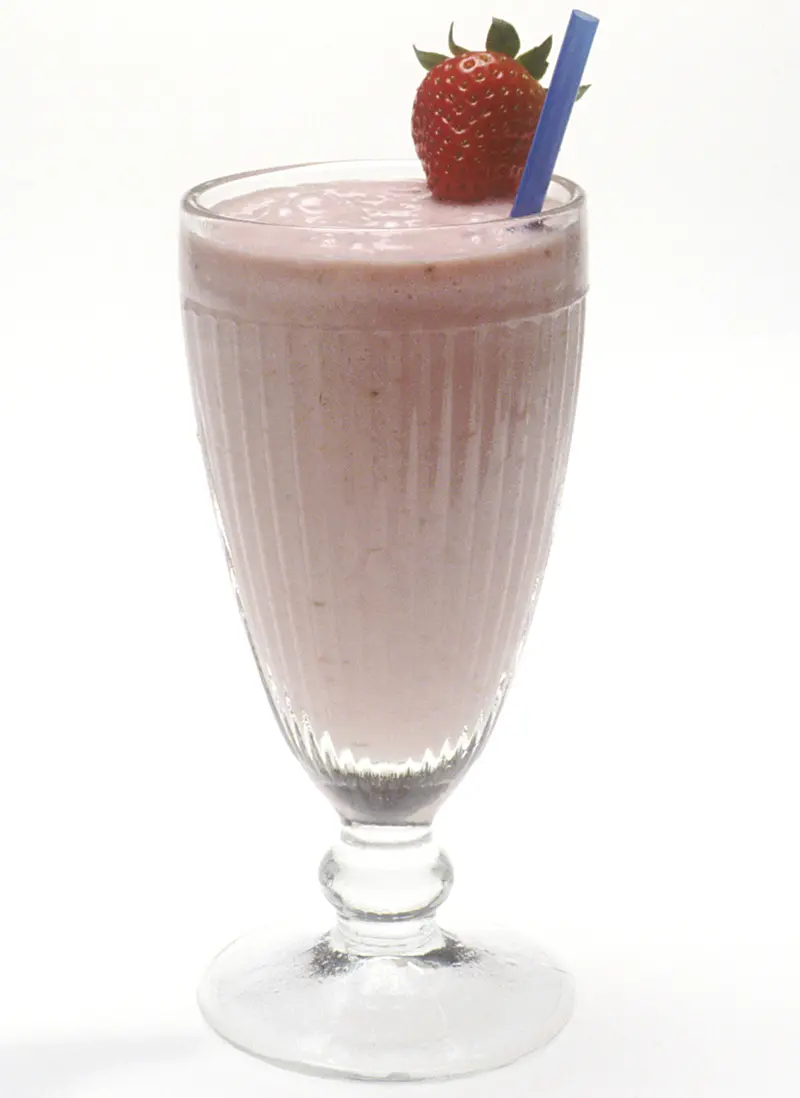
- Strawberry: blend 150 g of hulled strawberries with 150 ml of milk until smooth, then add 2 scoops of vanilla ice cream. Ripe, in-season strawberries need no extra sugar; out of season, add a teaspoon or use frozen berries. See our strawberry milkshake.
- Malted: dissolve 2 tablespoons of malted milk powder in the milk before adding the ice cream. See our malted milkshake.
- Banana, salted caramel, cookies and cream, peanut butter, mint choc chip and coffee all follow the same pattern.
Here are all of them:
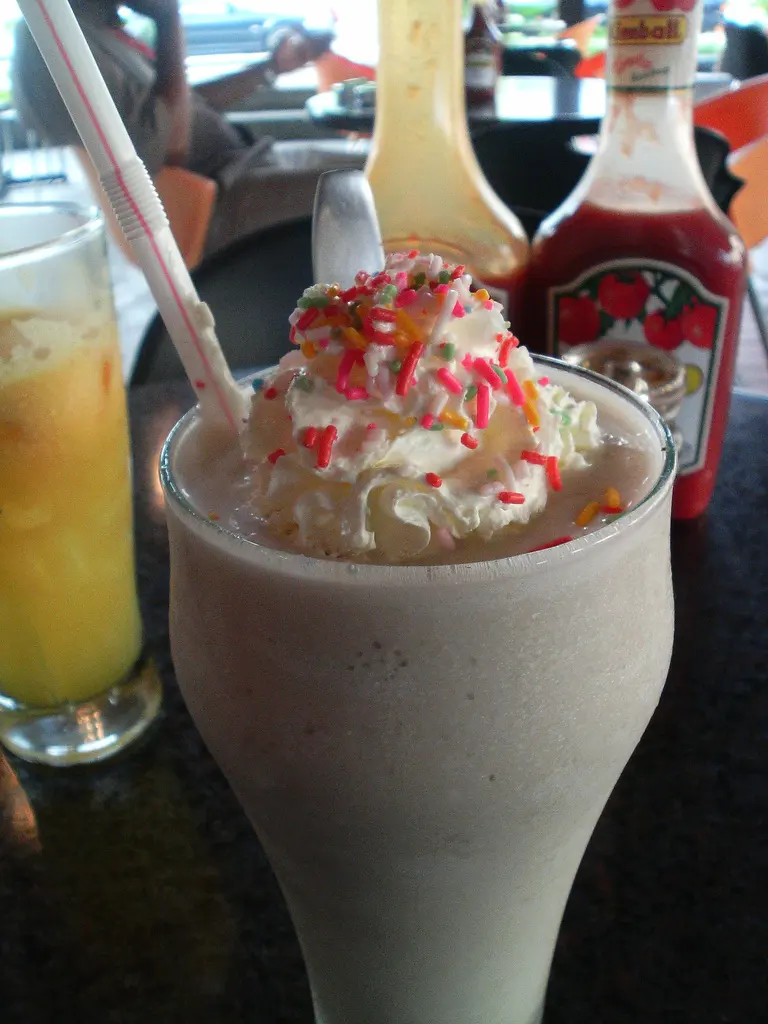
No. 078 · Milkshake
Banana milkshake
A ripe banana, vanilla ice cream and milk blended smooth, with an optional pinch of cinnamon.
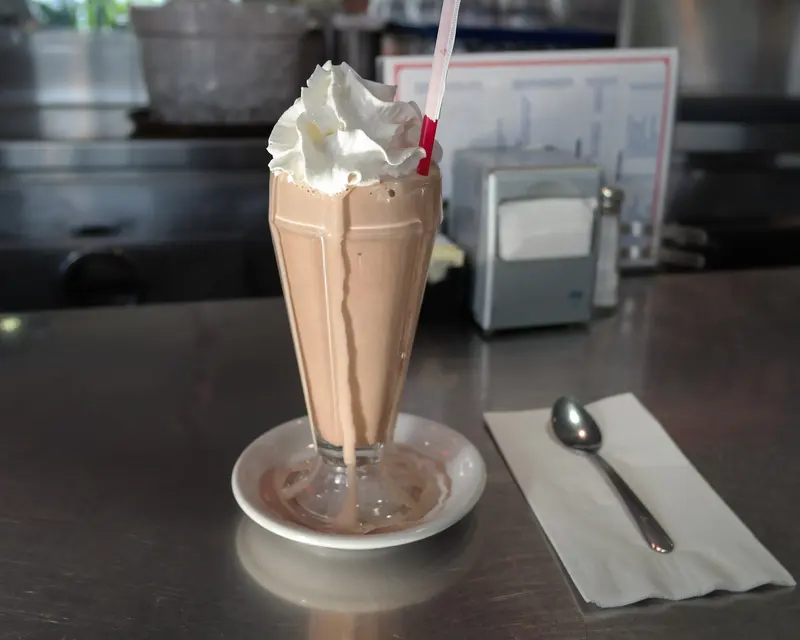
No. 076 · Milkshake
Chocolate milkshake
Chocolate ice cream, milk and chocolate sauce blended thick. Use vanilla ice cream and cocoa if that's what you have.
Photo: Visitor7, CC BY-SA 3.0
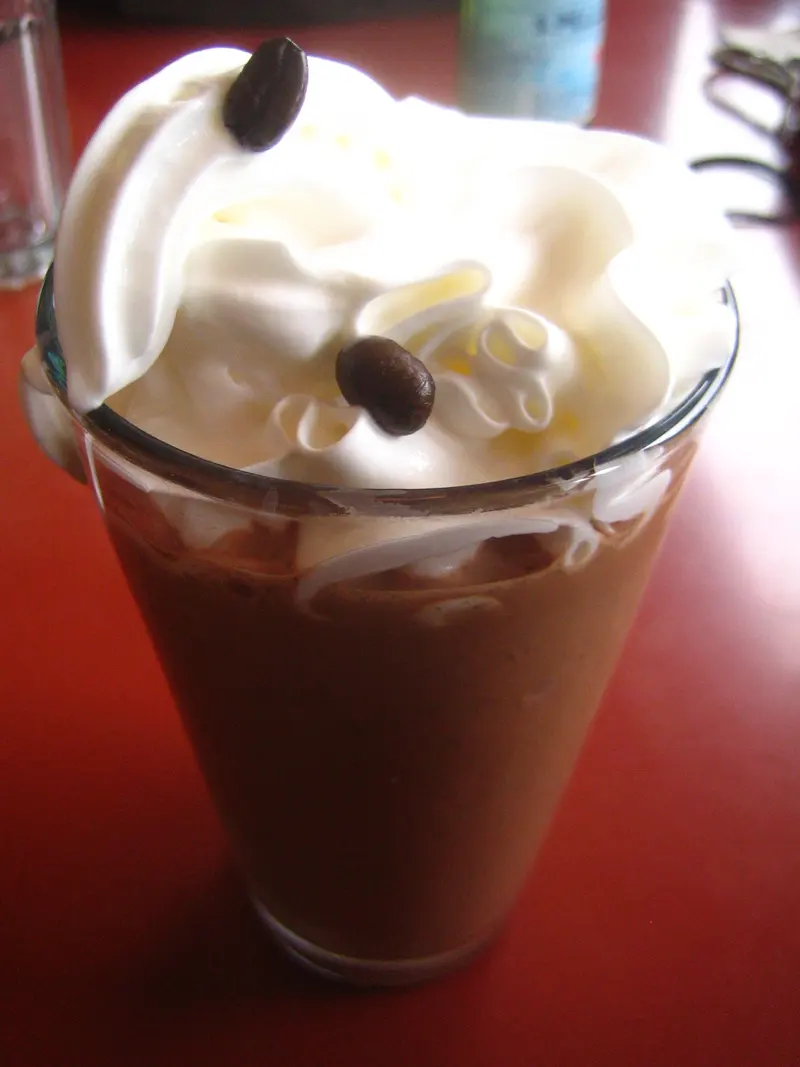
No. 084 · Milkshake
Coffee milkshake
Vanilla ice cream blended with cooled espresso and milk. Contains caffeine, so it's one for grown-ups.
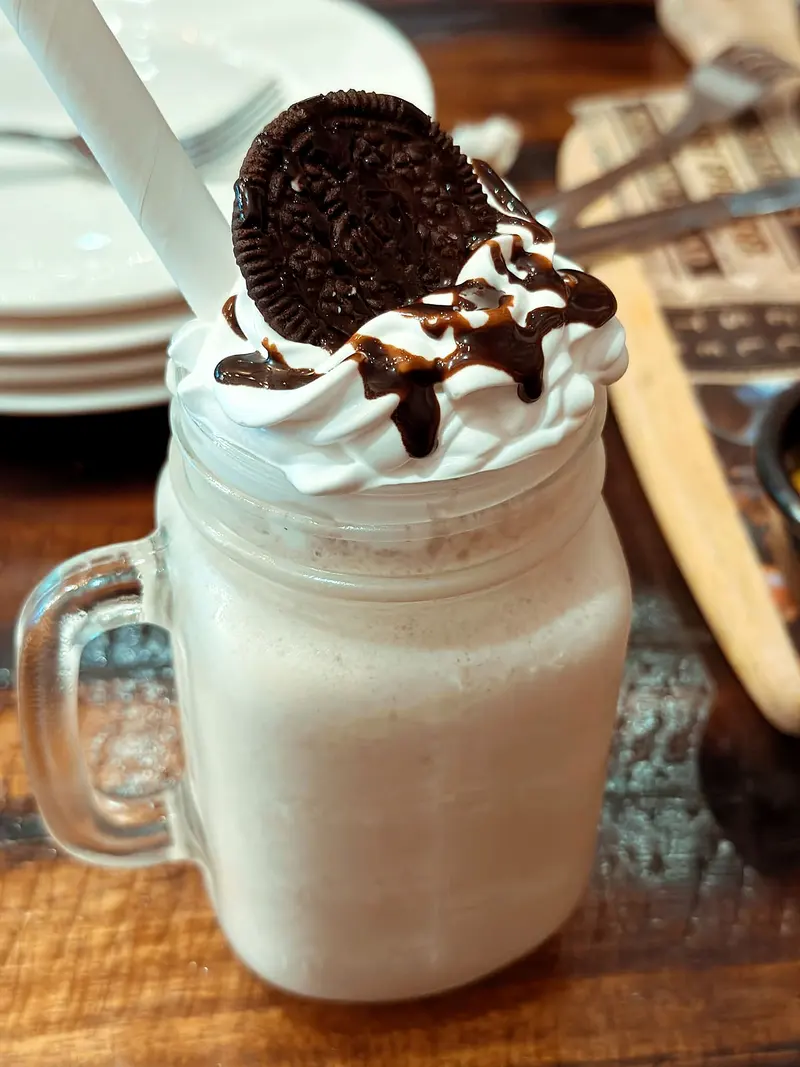
No. 080 · Milkshake
Cookies and cream milkshake
Vanilla ice cream and milk blended with chocolate sandwich biscuits.
Photo: TheSpoonShadow, CC BY 4.0
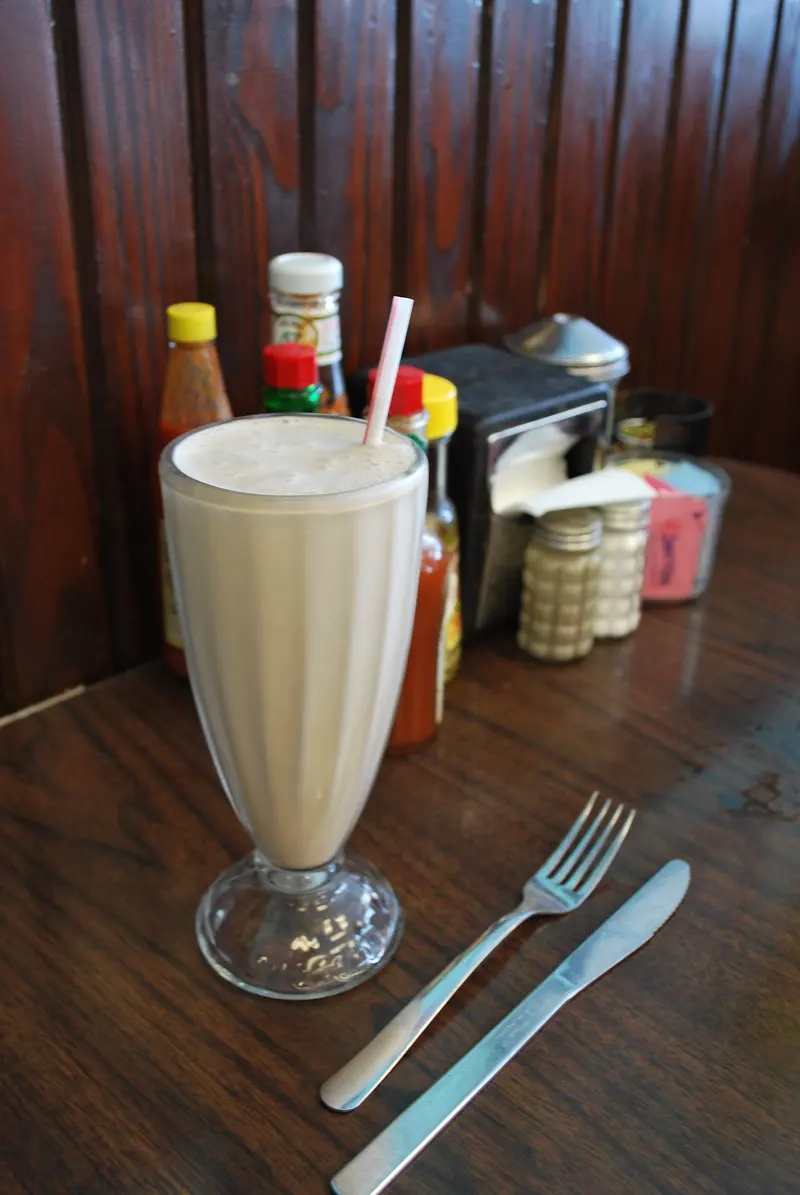
No. 083 · Milkshake
Malted milkshake
A vanilla shake with malted milk powder for a toasty, biscuity flavour. Contains barley (gluten).
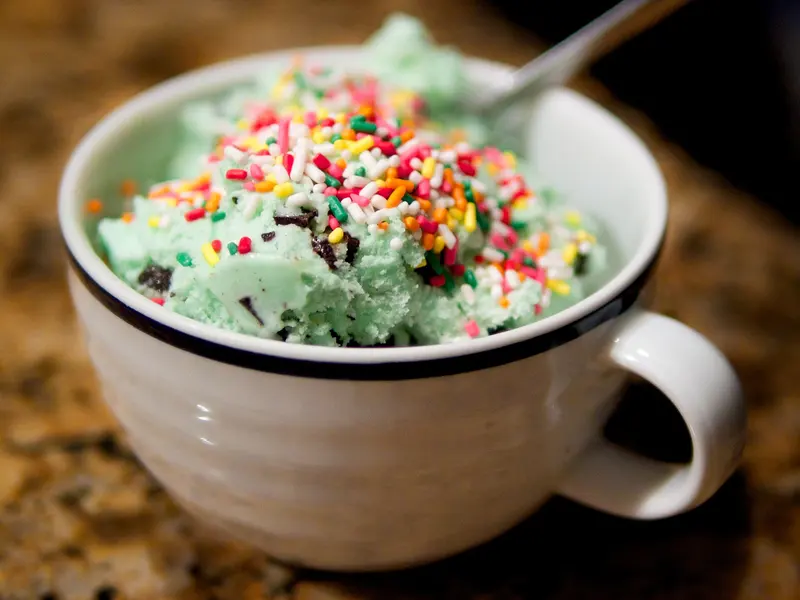
No. 082 · Milkshake
Mint choc chip milkshake
Mint choc chip ice cream and milk blended, finished with grated chocolate.
Photo: Austin Kirk, CC BY 2.0
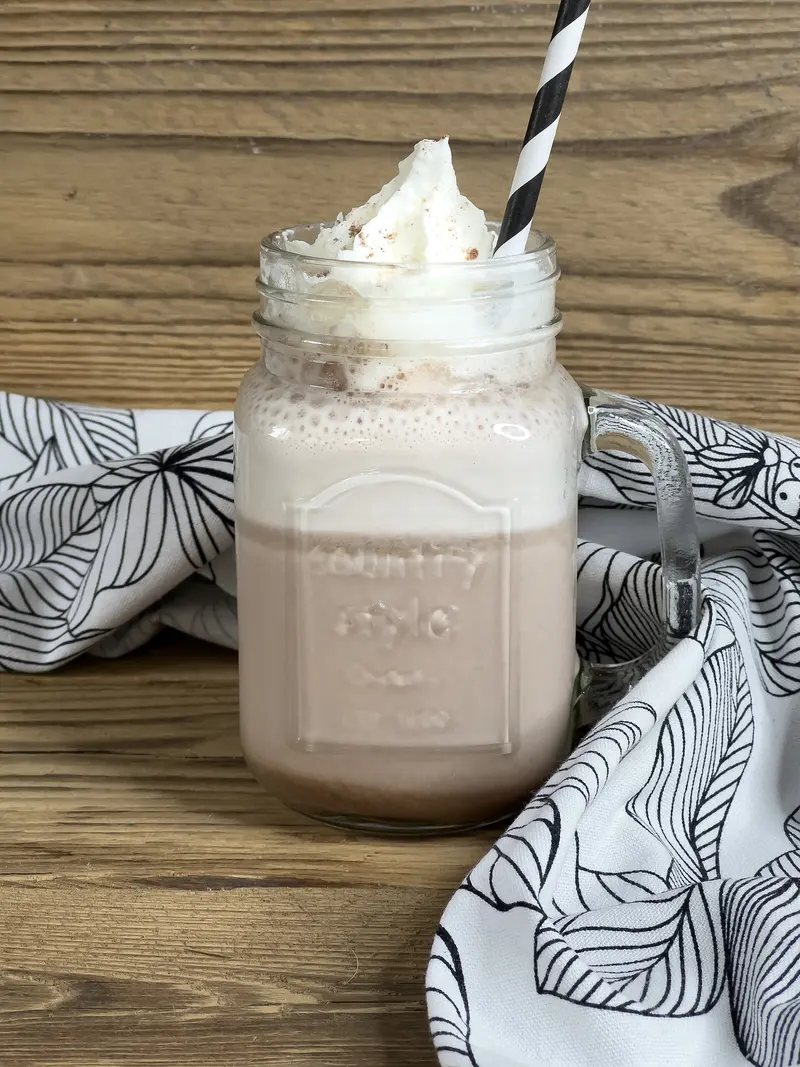
No. 081 · Milkshake
Peanut butter milkshake
Vanilla ice cream, milk and smooth peanut butter blended thick. Contains peanuts.
Photo: Ewelina Podrez-Siama, CC BY 2.0
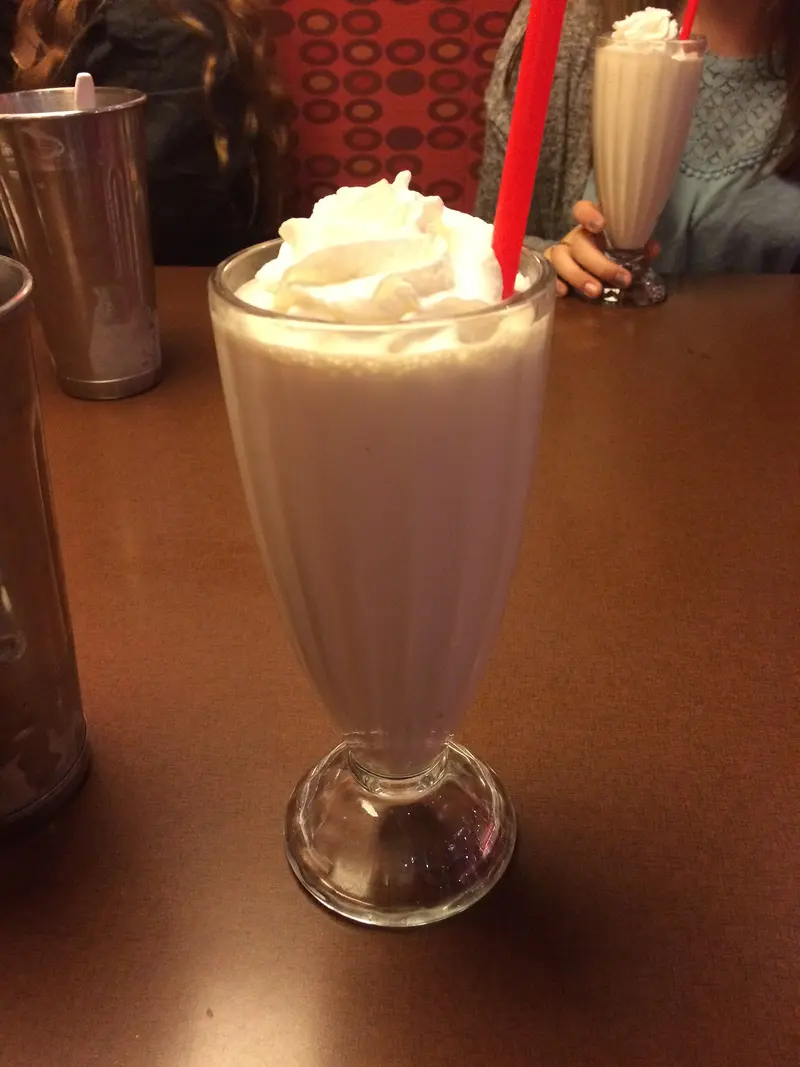
No. 079 · Milkshake
Salted caramel milkshake
Vanilla ice cream blended with caramel sauce and a pinch of sea salt.
Photo: Samantha Sturgis, CC BY-SA 4.0
No. 077 · Milkshake
Strawberry milkshake
Fresh strawberries blended with vanilla ice cream and milk for a real-fruit pink shake.
Photo: Renee Comet (Photographer), Public domain
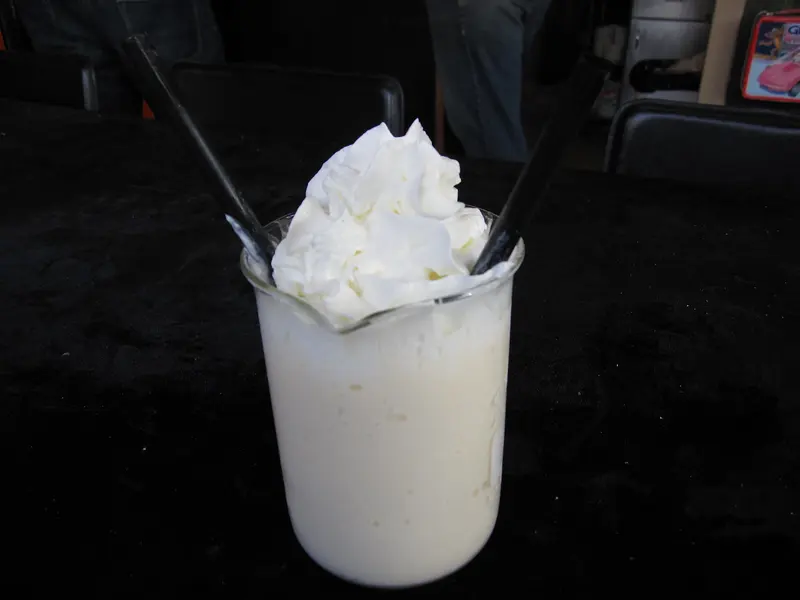
No. 075 · Milkshake
Vanilla milkshake
Vanilla ice cream and cold whole milk blended until thick and frothy. The base for most of our shakes.
Photo: jencu from bay area, usa, CC BY 2.0
Thick, thin, or frothy?
- Too thin? Add another scoop of ice cream and blend for a few seconds only.
- Too thick to drink? Add a splash more milk.
- Want it café-style? A spindle drinks mixer whips the shake in its own cup, café-style.
- Want it colder? Chill the glass in the freezer for ten minutes first.
Milkshakes, sugar and children
A homemade milkshake is a treat rather than an everyday drink. The NHS says the sugar found naturally in milk doesn't count as "free sugars", but sugars added to food and drinks, including honey and syrups, do. It recommends adults have no more than 30 g of free sugars a day, children aged 7 to 10 no more than 24 g, and children aged 4 to 6 no more than 19 g. Ice cream, sauces and sweet toppings all add to that, so a smaller glass, riper fruit and no extra sugar make a shake easier to fit in.
For young children, the NHS says cows' milk shouldn't be a main drink before 12 months; whole and semi-skimmed milk can be introduced as a main drink from age 1, but skimmed and 1% milk shouldn't be the main drink for under-5s because they don't contain enough calories. It also lists flavoured milk among drinks that aren't suitable for young babies.
If you're wondering why bottled milkshakes and café shakes are treated differently by the sugar tax, our post on the sugar levy on soft drinks explains the milk rules.
Allergies
Milk is a major allergen, and the shakes can include others: malted milk powder is made with barley, which contains gluten, and peanut butter and some biscuits and sauces bring their own. Our post on allergens in drinks covers what to look for on labels.
The kit
A jug blender does the job; an ice cream scoop makes the measures consistent, and a tall glass shows it off:
- Blender Search Amazon.co.uk for Blender (opens Amazon in a new tab)
- Milkshake (drinks) mixer Search Amazon.co.uk for Milkshake (drinks) mixer (opens Amazon in a new tab)
- Ice cream scoop Search Amazon.co.uk for Ice cream scoop (opens Amazon in a new tab)
Amazon links search Amazon.co.uk, so you can compare options yourself. As an Amazon Associate I earn from qualifying purchases.
For a cold-weather alternative, try one of our hot chocolate recipes, or a fruit-and-yoghurt smoothie.
Sources
Checked when this entry was written. Links open the original source in a new tab.
Checked 23 November 2026.